This research benefited from data collection resources provided by the Bright Initiative powered by Bright Data, as well as data from the AMCHA Initiative, which has been documenting antisemitic incidents and anti-Israel groups on U.S. campuses since 2015. Computational resources were provided by Jetstream2 at Indiana University through allocation HUM200003 from the Advanced Cyberinfrastructure Coordination Ecosystem: Services & Support (ACCESS) program, supported by National Science Foundation grants #2138259, #2138286, #2138307, #2137603, and #2138296.
Clarifying Note
This report does not conflate pro-Palestinian advocacy with antisemitism. We affirm the universal right to free expression, peaceful protest, and legitimate political criticism—of Israel, as well as of any other state or actor. We unequivocally condemn all forms of racism and antisemitism. Our analysis focuses on documented antisemitic incidents and on online activity where anti-Israel activism intersects with the glorification of violence and the amplification of extremist narratives. We recognize the diversity of perspectives within campus activism and remain committed to academic rigor, critical inquiry, and the protection of pluralistic discourse.
Executive Summary
Radicalization and Antisemitism in Campus Activism: A Data-Driven Analysis of U.S. Universities (2015-2024)
This report explores the relationship between anti-Israel campus activism and the increase in antisemitic incidents at U.S. universities between 2015 and 2024. Drawing on a comprehensive dataset—including nearly 10,000 recorded antisemitic incidents, over 1,000 anti-Israel campus groups, and more than 76,000 Instagram posts—the study demonstrates how digital coordination, radicalized rhetoric, and offline mobilization have increasingly converged, particularly following the October 7, 2023 Hamas attacks.
The data reveals that antisemitic activity on campus is not random or isolated, but follows discernible patterns. Spikes in incidents consistently align with major geopolitical events involving Israel or periods of heightened campus activism that is antagonistic to Israel, such as the spring 2024 encampments. These surges are especially pronounced at universities where anti-Israel groups are already active. The analysis shows that institutions with a greater number of such groups tend to report more antisemitic incidents, with the sharpest increases occurring at schools already experiencing elevated levels of antisemitism. This points to a compounding dynamic in which the presence of anti-Israel groups not only correlates with, but may actively contribute to, the normalization and escalation of antisemitic expression on campus. Given that much of the rhetoric circulated by these groups closely mirrors—and in some cases directly reproduces—propaganda from Hamas and other designated terrorist organizations, as documented in this report, the pattern is unsurprising.
Although often framed as grassroots student activism, the report finds that anti-Israel campus groups are closely linked and share a common ideological framework. A central node in this network is National Students for Justice in Palestine (SJP), which functions as a strategic and narrative hub. As soon as October 8, 2023, National SJP called for a nationwide “Day of Resistance” and circulated organizing toolkits that framed the violence as an act of legitimate liberation. Local chapters echoed this messaging both in protests and across social media platforms.
The report underscores Instagram’s role as a central platform for ideological dissemination and cooperation. 40% of Instagram content from anti-Israel campus groups is co-authored using the platform’s “Collab” feature. These groups frequently coordinate with radical off-campus organizations to amplify their messaging. Foreign actors aligned with the Iranian regime have also tried to influence the student movement.
The most frequent external collaborator is the Palestinian Youth Movement (PYM), which frequently partners with National SJP and other campus groups. PYM’s rhetoric and visual language mirror that of Hamas and other militant organizations, glorifying “martyrdom” and armed resistance. Other frequent off-campus collaborators are organizations from the radical left. These narratives are seamlessly woven into campus messaging, increasingly blurring the line between legitimate protest and ideological propaganda. The social media posts often serve not so much as expressions of solidarity with Palestinians, but rather as tools for ideological recruitment and the normalization of extremist views, while marginalizing dissenting voices.
Some of the content shared by anti-Israel campus groups recycles rhetoric and imagery taken directly from official Hamas materials, repackaged using the language of social justice, anti-colonialism, and decolonization. What was once fringe discourse—such as the demonization of Israel, glorification of “martyrdom,” and justification of extreme violence and terrorism against civilians as resistance—has, since October 7, entered the mainstream of campus activism, measurable in the hundreds of thousands of likes some of the posts have garnered.
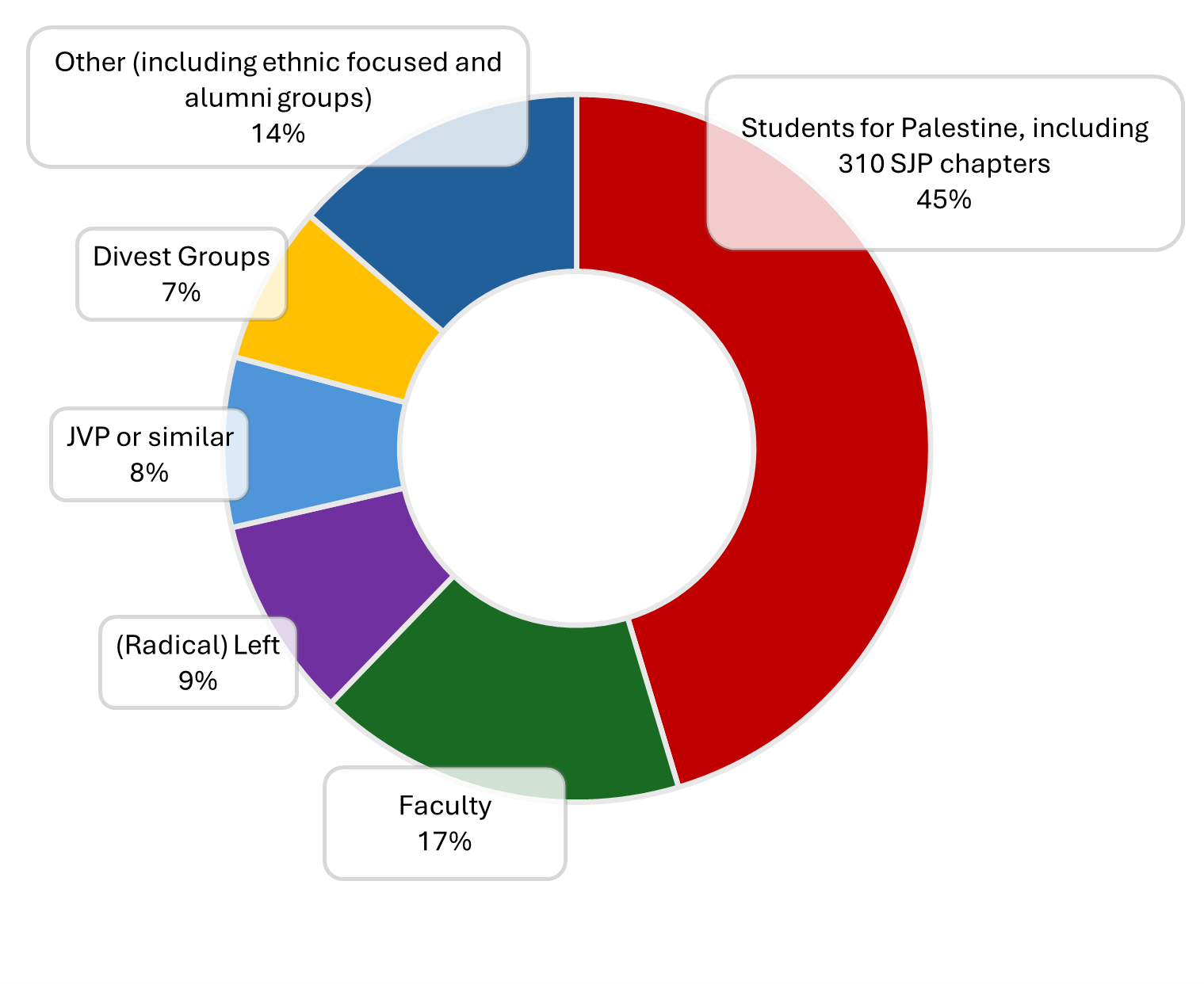
Faculty-led groups (comprising 17% of anti-Israel campus organizations), graduate student unions, and anti-Zionist Jewish or partly Jewish groups such as Jewish Voice for Peace play a crucial role in legitimizing and sustaining the movement. Their participation lends academic and moral credibility to extreme narratives and helps embed these views into the institutional framework of higher education.
The report urges universities to recognize that some campus activism—though framed as support for Palestinian rights—mirrors radical narratives promoted by designated terrorist groups. This has created a chilling effect, particularly for Jewish students and faculty, as well as for those who reject sweeping condemnations of Zionism or Israel. More broadly, it undermines open debate, fosters ideological conformity, and discourages critical discussion of complex issues. Universities must recommit to being places where diverse perspectives can be expressed without fear. Leaders—faculty, administrators, and students—should unequivocally condemn both the glorification of violence and the blanket demonization of Israelis or any group. The issue is not the presence of radical views, but the failure to confront rhetoric that legitimizes violence and targets Jewish identity and Zionism. Left unchallenged, such positions risk becoming normalized, silencing dissent and transforming campuses into ideologically rigid spaces—a deeply self-defeating outcome for institutions dedicated to free inquiry. Without a principled stance, universities jeopardize their moral credibility, their responsibility to protect all members of the community, and their core mission of fostering open, critical engagement.
Contents
1. Introduction
2. Dataset
3. Antisemitism Incidents
4. Antisemitic Incidents in Correlation to Anti-Israel Groups
5. Instagram Posts by Anti-Israel Campus Groups
6. Mapping the Anti-Zionist Campus Group Networks
7. The National Students for Justice in Palestine (SJP) and Its Network
8. Conclusion
9. Annex: "Day of Resistance Toolkit"
Chapter 1
Introduction
In recent years, U.S. college campuses have become key battlegrounds for highly organized and increasingly radicalized anti-Israel activism. While political de- bate and student activism are vital to academic freedom, the rhetoric and ac- tions of some groups now frequently cross the line into antisemitism, creating a hostile climate for many Jewish students and faculty. Cary Nelson’s Mindless offers a compelling analysis of how such activism has been permitted—and en- couraged—to thrive within academic institutions, often without adequate critical scrutiny (Nelson, 2025).
The issue has a growing online dimension that reaches well beyond university campuses. Social media platforms play a central role in mobilizing these groups, amplifying radical narratives, and coordinating actions at local, national, and even international levels. These platforms and their users shape perceptions of the Israel–Hamas conflict in significant ways, often through emotionally charged and binary framings that fuel political fervor and, at times, outright incitement (Alamsyah et al., 2024; Karagiorgos et al., 2023). Slogans such as “Free Palestine”, “From the river to the sea, Palestine will be free”, and “Globalize the Intifada” have become rallying cries, circulated extensively by student organizations across both digital and physical spaces.
Crucially, the implicit violence of such slogans no longer remains rhetorical. Attacks on Jews —on and off campus— have risen sharply, with incidents becoming increasingly violent, even deadly. The brutal murder of Yaron Lischinsky and Sarah Milgrim outside the Capital Jewish Museum on May 21, 2025, offers a stark example of how such rhetoric can be weaponized. The assailant reportedly chanted “Free Palestine” to justify his actions, underscoring how inflammatory slogans can escalate into acts of violent extremism. Just days later, on June 1, 2025, another attacker—again shouting “Free Palestine”—used a flamethrower and Molotov cocktails to set fire to a group gathered in Boulder, Colorado, at a march in support of the hostages held in Gaza. Fifteen people were injured, one of them critically. Among the injured was a Holocaust survivor.
The widespread adoption and emotional impact of these slogans warrant closer scrutiny. Investigating how they are utilized to justify violence and the processes by which they have become so deeply embedded and unquestionable in some social circles is critical. A significant concern is the apparent absence of critical reflection among anti-Israel campus groups regarding language associated with violence, exemplified by references to the Intifada or chants such as “from the river to the sea, Palestine will be free” —free of what or whom exactly? This leads to essential inquiries: Who are the central actors and networks driving the dissemination of these slogans? And to what degree does the proliferation of this rhetoric correspond with the documented rise in antisemitic incidents, particularly within university settings?
Surveys reflect the personal impact of an antisemitic, hostile climate on and off campus. According to the 2024 AJC Survey, a majority of American Jews report changing their behavior due to fears of antisemitism (American Jewish Commit- tee, 2025). Several recent studies provide in-depth analyses of this phenomenon. The ADL’s 2023–2024 report on anti-Israel activism (Anti-Defamation League, 2025), the 2025 Harvard Report (President and Fellows of Harvard College, 2025), and the AMCHA Initiative’s documentation of campus antisemitism (AMCHA Initiative, 2022, 2024), all point to the increasing prevalence of anti-Israel rhetoric blending seamlessly with antisemitic tropes.
The U.S. Congress began scrutinizing the funding transparency of several major anti-Israel campus organizations in the summer of 2024, investigating pos- sible links to terrorist groups (United States House Committee on Ways & Means, 2024). One of the most active, not-campus-based groups within this network is the transnational Palestinian Youth Movement (PYM), which reportedly main- tains ties to the U.S.-designated terrorist organization Popular Front for the Liberation of Palestine (PFLP) (NGO Monitor, 2025). These non-university- affiliated groups and well-organized national student organizations, such as Na- tional Students for Justice in Palestine (SJP), exert significant influence on local campus activism and contribute to the dissemination of extremist rhetoric that, as our study demonstrates, is often indistinguishable from that promoted by des- ignated terrorist organizations—including Hamas.
Research has also drawn attention to the role of faculty in perpetuating anti- Zionist and antisemitic rhetoric. Some faculty members have normalized hostility toward Israel and Jewish identity under the banner of “anti-colonial” or “social justice” frameworks (AMCHA Initiative, 2024; Divine et al., 2019; Nelson, 2019).
Meanwhile, Jewish students on campuses face an increasingly difficult climate.
Even before October 7, 2023, surveys have shown that the majority of Ameri- can Jewish college students have witnessed or experienced antisemitic incidents, mostly on campus or at a college-affiliated event (Ipsos, 2023). The 2024 Brandeis report Drawing the Line reveals that many Jewish students struggle to navigate their identity on campuses where anti-Israel sentiment is pervasive (Wright et al., 2024). The anti-Israel protests and encampments have had a negative effect on Jewish students’ education and social lives (Hillel International and Benenson Strategy Group, 2024).
Farber and Poleg demonstrate that anti-Israel activism on campus most acutely affects self-identified progressive Jewish students. They report feeling emotionally attacked and marginalized when attempting to engage with seemingly progressive or intersectional movements involved in anti-Israel activities. Additionally, college diversity officers and academic programs have largely neglected issues of concern to Jewish students, further deepening their sense of exclusion (Farber & Poleg, 2019).
The attacks on Jewish students have increased globally in recent years, exacerbated after 10/7 (Freedman & Hirsh, 2024). In a 2023 survey in Australia, 64% of Jewish students reported experiencing at least one incident of antisemitism during their time at university, and 57% stated they had hidden their Jewish identity to avoid antisemitism (Social Research Centre, 2023). The situation has since worsened. Australia’s Special Envoy to Combat Antisemitism, Jillian Segal, has described antisemitism as systemically embedded in university campuses, a claim substantiated in a parliamentary inquiry (Parliamentary Joint Committee on Human Rights (Australia), 2024, 2025). In the United Kingdom, the Community Security Trust (CST) recorded a record number of 272 university-related antisemitic incidents in the academic year 2023/24, including assaults, death threats, and damage and desecration of Jewish property (Community Security Trust, 2024). There have been similar reports from France, Germany, Italy, and the Netherlands (Bécel, 2024; Contemporary Jewish Documentation Center, 2025; Sapir & Kluveld, 2024; Stoller, 2025).
Finally, this issue has drawn national policy attention. Recent efforts by the Department of Homeland Security—including monitoring social media for anti- semitic content—reflect growing federal concern (U.S. Citizenship and Immigration Services (USCIS), 2025). However, such measures also raise questions about due process and the risk of denying or revoking visas based on interpretations of online speech.
Chapter 2
Dataset
This study draws on three datasets:
The online activity of anti-Israel campus groups on Instagram from 2013 to 2024, comprising over 76,000 posts and related comments;
A database of nearly 10,000 antisemitic incidents recorded between 2015 and 2024 across 571 universities;
A list of more than 1,000 anti-Israel campus groups active at 368 universities.
The data on antisemitic incidents and anti-Israel campus groups is publicly avail- able on the website of the AMCHA Initiative, “a non-profit organization dedicated to investigating, documenting, educating about, and combating antisemitism at institutions of higher education in America.”1To our knowledge, it constitues the most comprehensive dataset of its kind. However, the reported number of incidents should be interpreted with caution for several reasons. There is no standardized national reporting system, and many incidents likely go unreported and are thus missing from the AMCHA database. In addition, due to the un- precedented surge in antisemitic activity on U.S. college and university campuses following October 7, 2023, the organization is working through a significant backlog. Because AMCHA processes incidents by institution, this may account for some apparent outliers with unusually low figures. We plan to publish an updated report with revised data later this year.
A total of 1,013 anti-Israel campus groups formed by students, faculty, and staff were identified. Approximately one-third of these are chapters of Students for Justice in Palestine (SJP). When combined with other explicitly pro-Palestinian groups, they account for 45% of all anti-Israel campus organizations. Faculty-led groups also represent a significant portion, comprising 17% of the total. Other no- table categories include radical leftist groups, anti-Zionist Jewish organizations, and groups primarily focused on divestment campaigns targeting Israel.
Figure 2.1: Different Types of Anti-Israel Groups active on U.S. Campuses (based on anti-Israel groups recorded by the AMCHA Initiative).
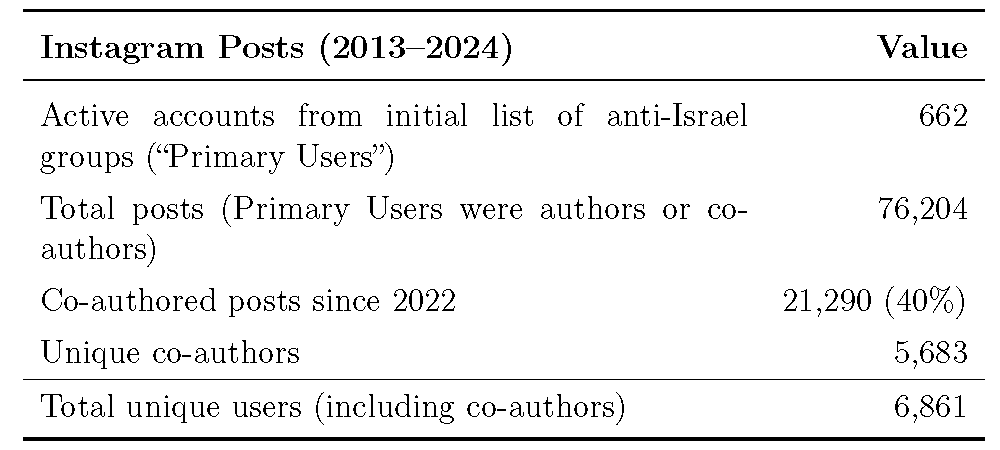
81% of the anti-Israel campus groups were found to be linked to Instagram accounts. However, some of these accounts were inactive or had been deleted at the time of data collection in January 2025. We successfully scraped publicly available data from 662 active accounts, resulting in a dataset containing detailed information on 76,204 posts published between 2013 and 2024. For each post, the dataset includes the post description, publication date, engagement metrics (likes and comment counts), co-authors or tagged users, and up to ten of the most recent comments (see Table 2.1).2
Table 2.1: Active accounts, number of posts, collaborators (co-authors).
Instagram introduced its Collab feature in October 2021, allowing users to co-author posts. When used, a post appears simultaneously on the profiles of all co-authors, sharing the same likes, comments, and engagement metrics. However, co-authorship requires active coordination: one user must invite another to collaborate, and the invitation must be accepted before the post is published on both accounts. Since 2022, 40% of all posts by anti-Israel groups are co-authored, indicating a strong collaboration.
Anti-Israel campus groups frequently collaborate among themselves, but they collaborate even more often with other accounts. In total, they engaged in collaborations with 5,683 Instagram accounts outside the original set of identified campus groups.
The majority of Instagram posts in the dataset are either single-image posts (55%) or carousel posts (35%), which together account for 90% of all content. In contrast, Reels and Videos are each used in only 5% of posts.
This indicates a strong preference among campus-based anti-Israel groups for static visual formats, suggesting that these bimodal content types—simple images and image sequences—offer the highest shareability within their activist networks.
2.The data acquisition was conducted using Bright Data’s automated web scraping technologies, which allowed us to systematically extract relevant content from identified Instagram profiles. The scraper navigated profile pages, retrieving post content, associated metadata, and engagement metrics (see https://brightinitiative.com/).
Chapter 3
Antisemitic Incidents
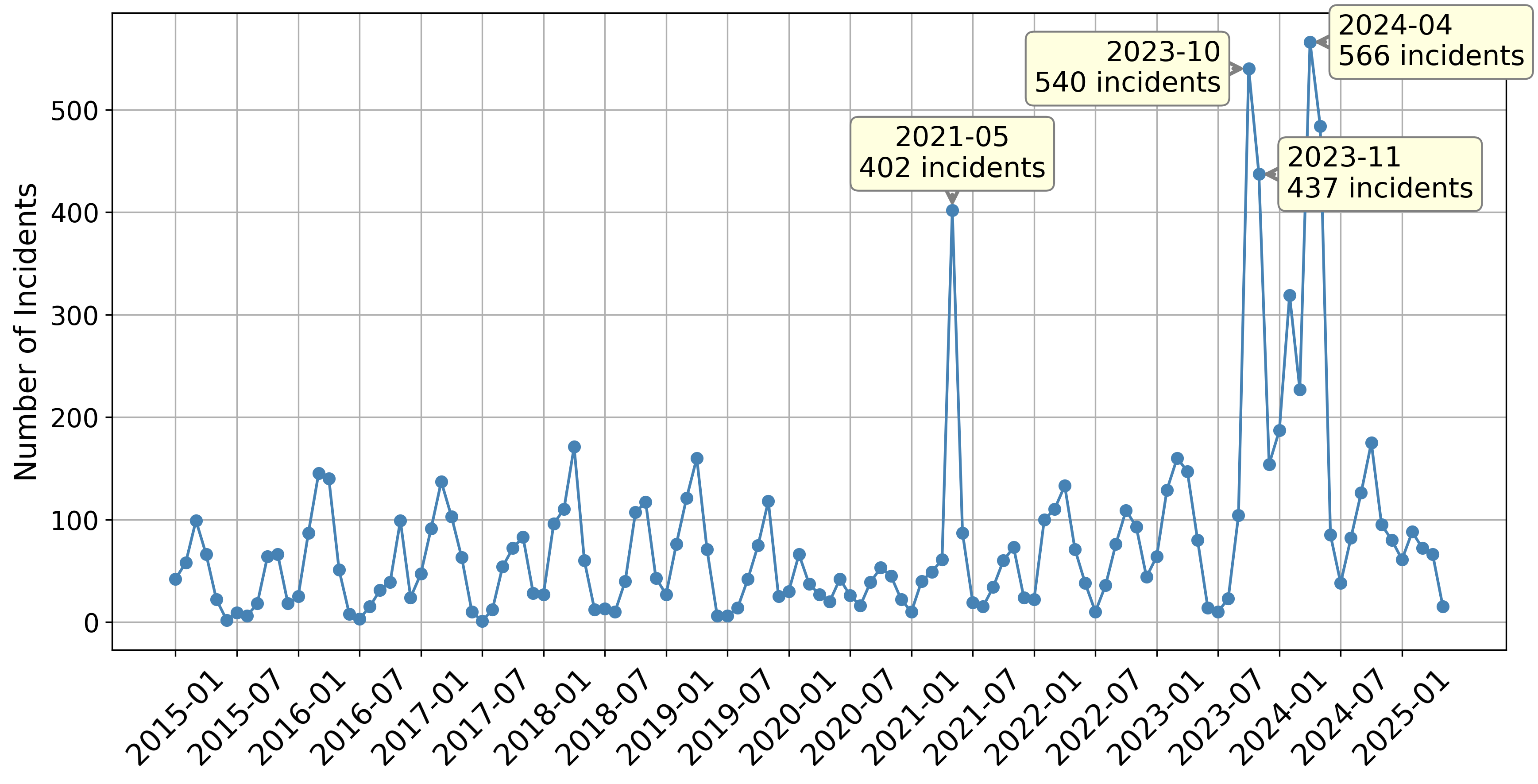
Antisemitic incidents on campus typically rise during the academic semester and decline when students and faculty are away—such as during summer and other academic breaks, as well as weekends. This pattern is expected. However, the highest monthly number of incidents were recorded in April 2024 during the wave of campus encampments, with 566 incidents, followed closely by October 2023, which saw 540. The third highest peak occurred during the Gaza war in May 2021 (see Figure 3.1).
Figure 3.1: Antisemitic Incidents on U.S. Campuses from 2015-2024. Source: AMCHA Initiative.
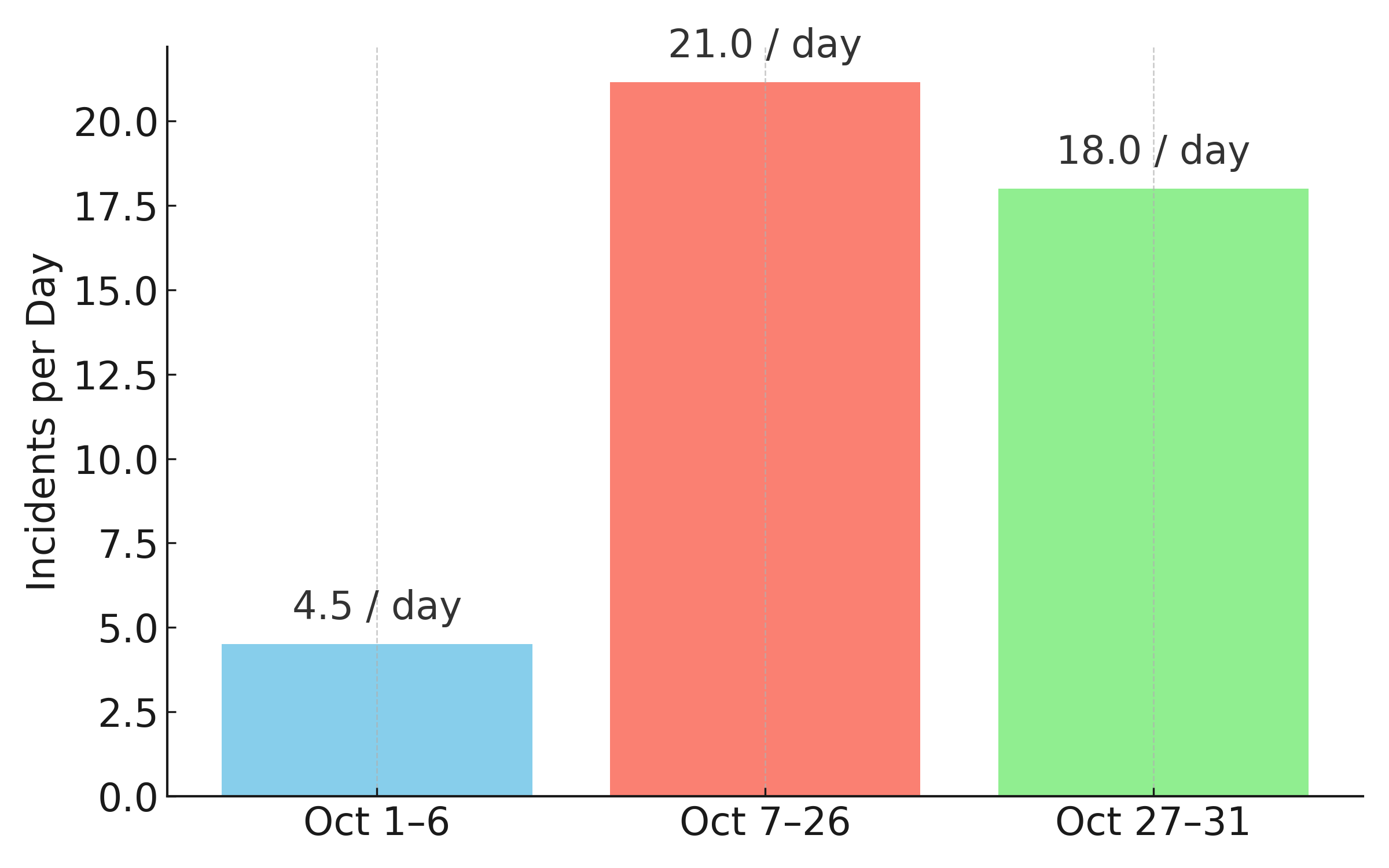
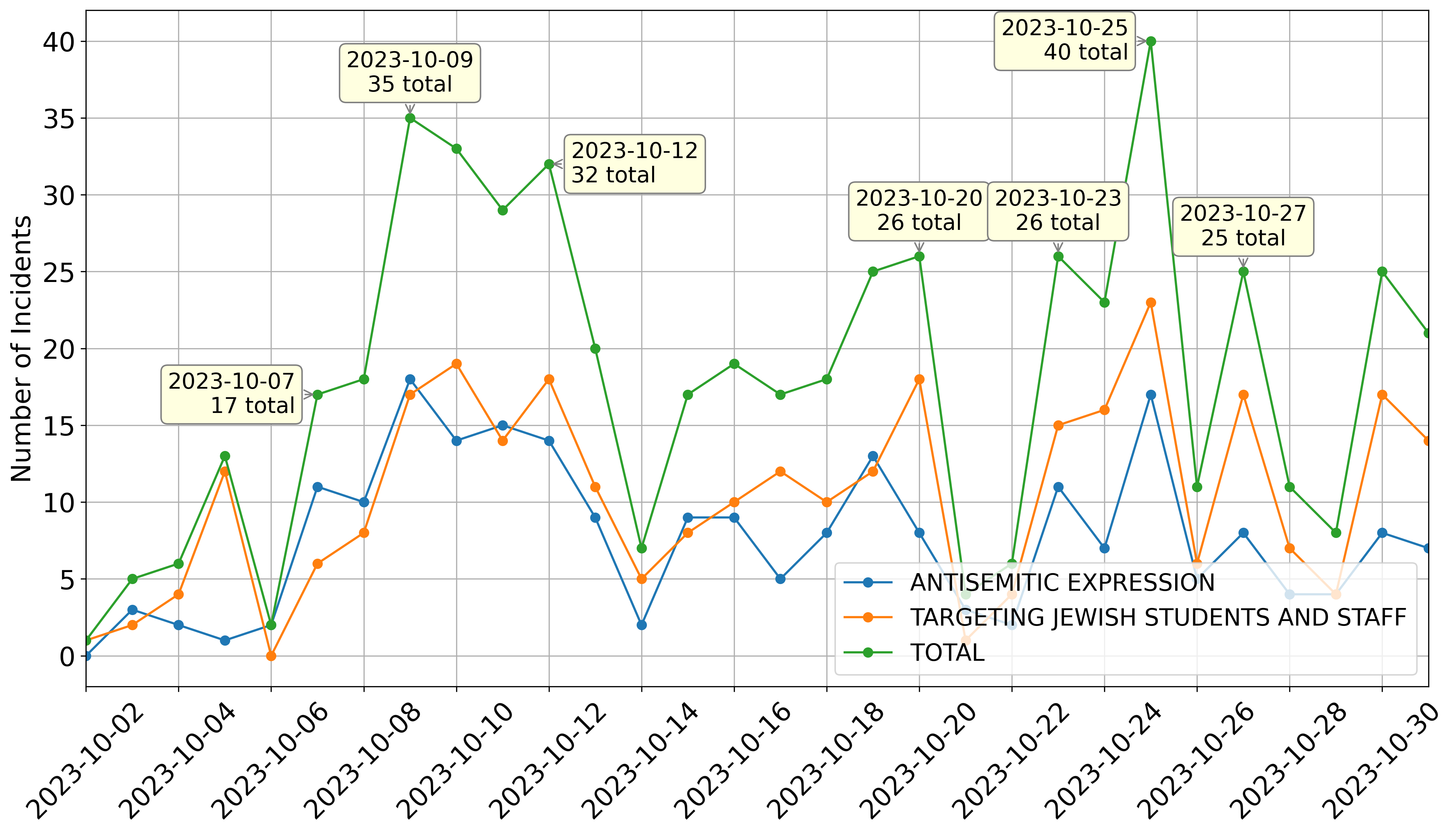
An in-depth examination of October 2023 reveals a substantial escalation in antisemitic incidents. The average daily incident rate increased from 4.5 during October 1—6 to 21 between October 7 and 26, falling slightly to 18 per day from October 27—31 (see Figure 3.2).
Figure 3.2: Normalized incidents per day in October 2023 after the Hamas massacre on October 7 and after the start of the ground invasion of Gaza by the IDF on October 27, 2023.
A notable rise to 17 incidents was recorded on October 7, with a further peak of 33 incidents occurring on the Monday following the pogrom in Israel, coincident with students’ return to campus (see Figure 3.3). This elevated level of daily antisemitic incidents persisted until October 12, which marked the “National Day of Resistance” as designated by the National Students for Justice in Palestine (SJP).1
It is noteworthy that the number of incidents per day was higher in the immediate aftermath of October 7, but–against expectations–declined slightly following the start of the Israeli ground invasion and the rising casualty count in Gaza.
Figure 3.3: Antisemitic Incidents on U.S. Campuses per Day in October 2023.
1. The SJP published a toolkit on October 8, 2023, in which it called for a national “Day of Resistance,” glorifying the Hamas attacks on October 7 with the words “National liberation is near— glory to our resistance, to our martyrs, and to our steadfast people.”
Chapter 4
Antisemitic Incidents in Correlation to Anti-Israel Groups
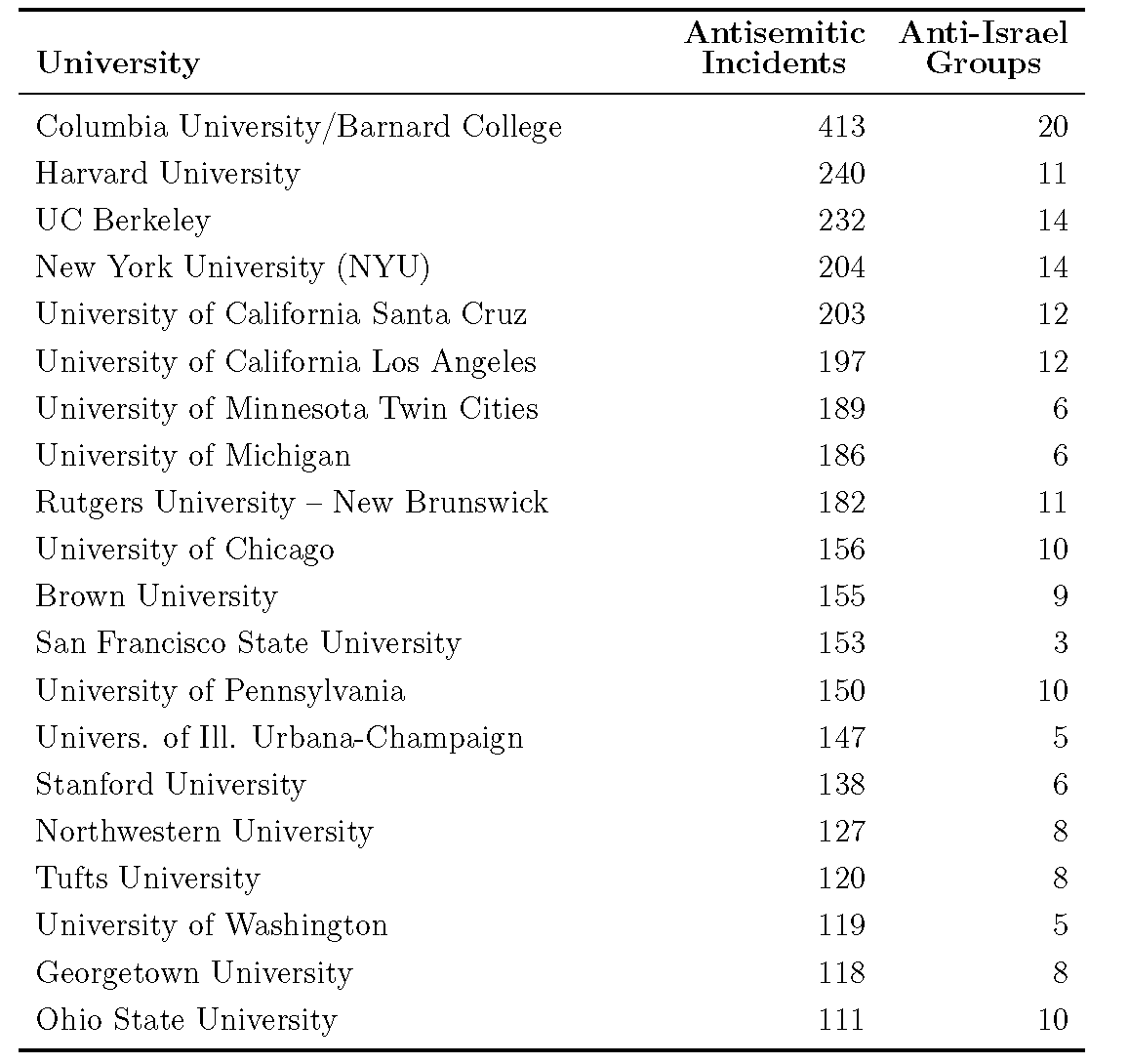
The accumulated number of antisemitic incidents from 2015 to 2024 is by far the highest at Columbia University/Barnard College, with over 400 recorded in- cidents. This is followed by Harvard University with 240 incidents. UC Berkeley and New York University (NYU) each reported around 200 incidents, closely followed by UC Los Angeles and the University of Michigan. These universities also tend to host a high number of anti-Israel campus groups. Notably, three University of California campuses rank among the top six: Berkeley, Santa Cruz, and Los Angeles, with San Francisco State University also appearing in 12th position. Ivy League and other elite institutions feature prominently on the list, including Columbia/Barnard, Harvard, Penn, Brown, and Stanford (see Table 4.1).
Out of 609 universities in the AMCHA dataset, antisemitic incidents were recorded at 571 institutions, and anti-Israel groups were present at 368. 48 universities had at least one anti-Israel group but had no recorded incidents, while 241 experienced antisemitic incidents without the presence of such groups. A total of 320 universities had both antisemitic incidents and at least one anti-Israel group recorded.
Table 4.1: Top 20 Universities with the Highest Number of Recorded Antisemitic Incidents and Groups, 2015-2024. Source: AMCHA Initiative.
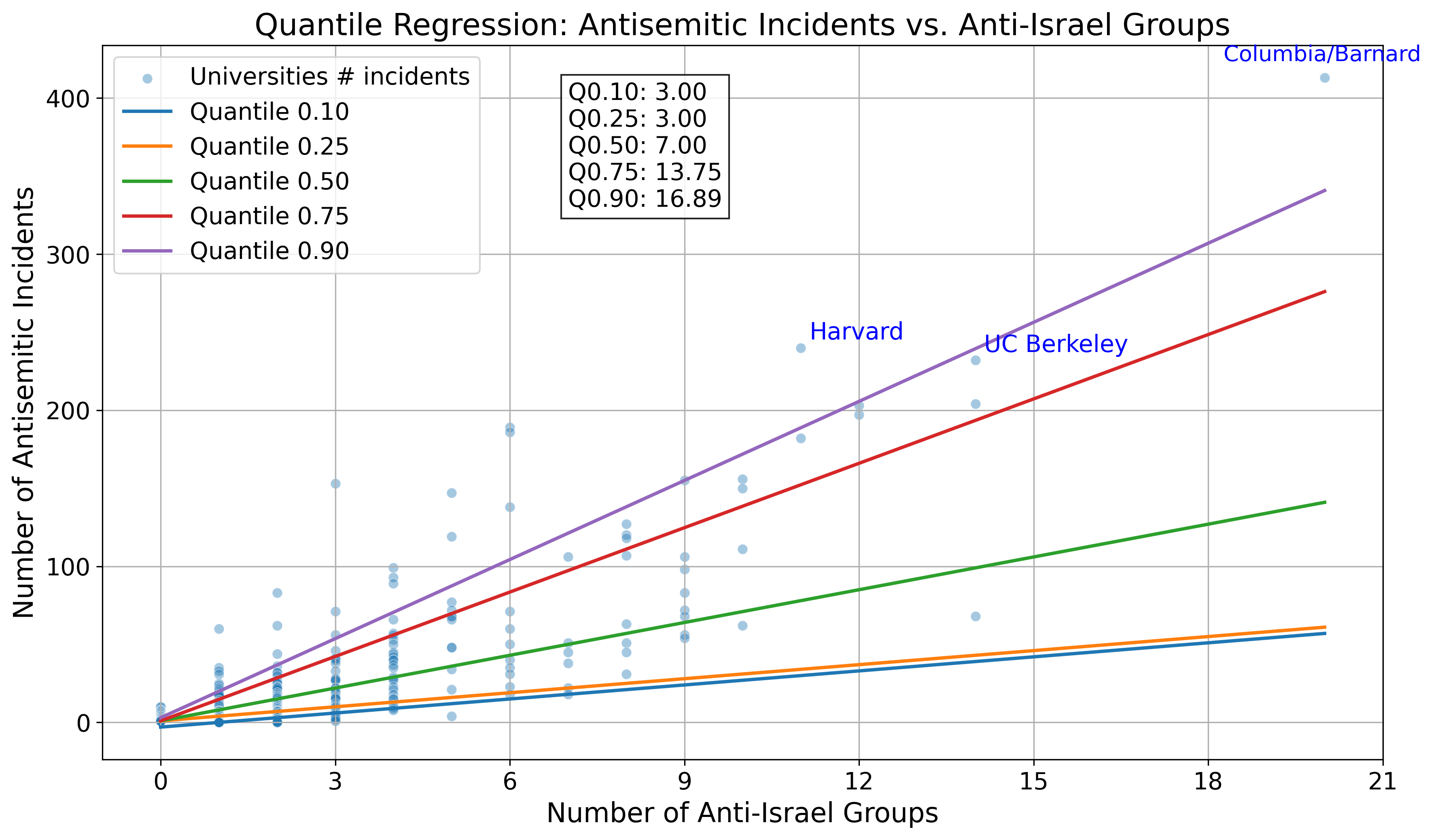
Previous reports have highlighted the potential impact of campus-based polit- ical activism on the campus climate for Jewish students and faculty (McDonald, 2024; Saxe et al., 2016). We found strong statistical evidence of a link between the presence of anti-Israel groups and antisemitic incidents on university campuses.1 While this does not prove causation, it does support the view that anti-Israel campus organizations may be a significant contributing factor in environments where antisemitism is prevalent. Quantile regression shows that on campuses with the highest numbers of antisemitic incidents, the link between the number of anti-Israel groups and such incidents is much stronger. While this relationship exists across all levels of campus activity, its intensity increases substantially at higher incident levels. At universities at the bottom 10 and 25% of incident rates, each additional anti-Israel group is associated (on average) with a modest, con- sistent increase of approximately three reported incidents. At the median, this figure more than doubles to an average of seven additional incidents per addi- tional group. Among the top 25% of universities with the highest incident rates, the impact grows more pronounced, reaching approximately 14 incidents for each additional group and peaking at nearly 17 in the top 10% (see Figure 4.1).
Figure 4.1: Differential Impact of Group Count Across Incident Levels (Quantile Regression)
The blue, orange, green, red, and purple lines in the graph show the relation- ship at the 10th, 25th, 50th (median), 75th, and 90th percentiles, respectively. Each line estimates the number of antisemitic incidents associated with the num- ber of anti-Israel groups for a university at that level of incident severity.
These numbers represent median effects at different quantiles and should be understood as indicative trends rather than precise forecasts. Importantly, these figures are based only on reported incidents; the actual number of antisemitic incidents is likely significantly higher.
However, the findings suggest a concerning dynamic: as anti-Israel group activity intensifies, it may contribute to a campus climate that normalizes or encourages antisemitic expression. Our interpretation is that a sustained level of anti-Israel group activity can foster a broader anti-Israel atmosphere in which some individuals feel emboldened to express antisemitic sentiments in words and action. Conversely, when anti-Israel group activity is limited or perceived as marginal, the escalation of antisemitic incidents tends to be contained.
However, this analysis is preliminary and should be interpreted with caution. Some of the data used is still being finalized and will need to be updated as more recent information on incident counts becomes available. In order to gain a comprehensive understanding of the complexities of this relationship, a more detailed statistical analysis is required. It does not account for several important contextual factors that may influence the observed correlation between the presence of anti-Israel groups and the occurrence of antisemitic incidents. For example, universities vary greatly in size, and the number of enrolled students or the overall campus population could affect both the likelihood of group formation and the frequency of reported incidents.
We have also not yet examined the intensity or nature of group activity. Some groups may be highly active through protests, online campaigns, or event pro- gramming, while others may exist primarily in name. The tone and radicalism of their rhetoric may also vary significantly. Additionally, the type of group may be relevant: faculty-led initiatives may function differently than student-led groups, and their impact on campus climate may differ accordingly. Other factors—such as geographic region, institutional structure, and political or ideological orientation—are also likely to play a role. These dimensions will be examined more closely in a forthcoming report.
1. A Mann–Whitney U test was performed to compare number of incidents in universities with number of groups 4 and > 4. There was a significant difference in number of incidents between the two groups (n = 552 and n = 57); z = -11.73, p < .0001, Effect size (r): 0.475). The median number of incidents was 3 in the lower group and 68 in the higher group. A Mann–Whitney U test was also performed to compare number of groups in universities with lower thresholds (3, 2, and 1). Even at the lowest threshold (1 group), the difference in incidents between universities with 0 or 1 group versus those with more than 1 is extremely significant — both statistically and practically (median = 1 vs. 19, Effect size (r): 0.66).
Chapter 5
Instagram Posts by Anti-Israel Campus Groups
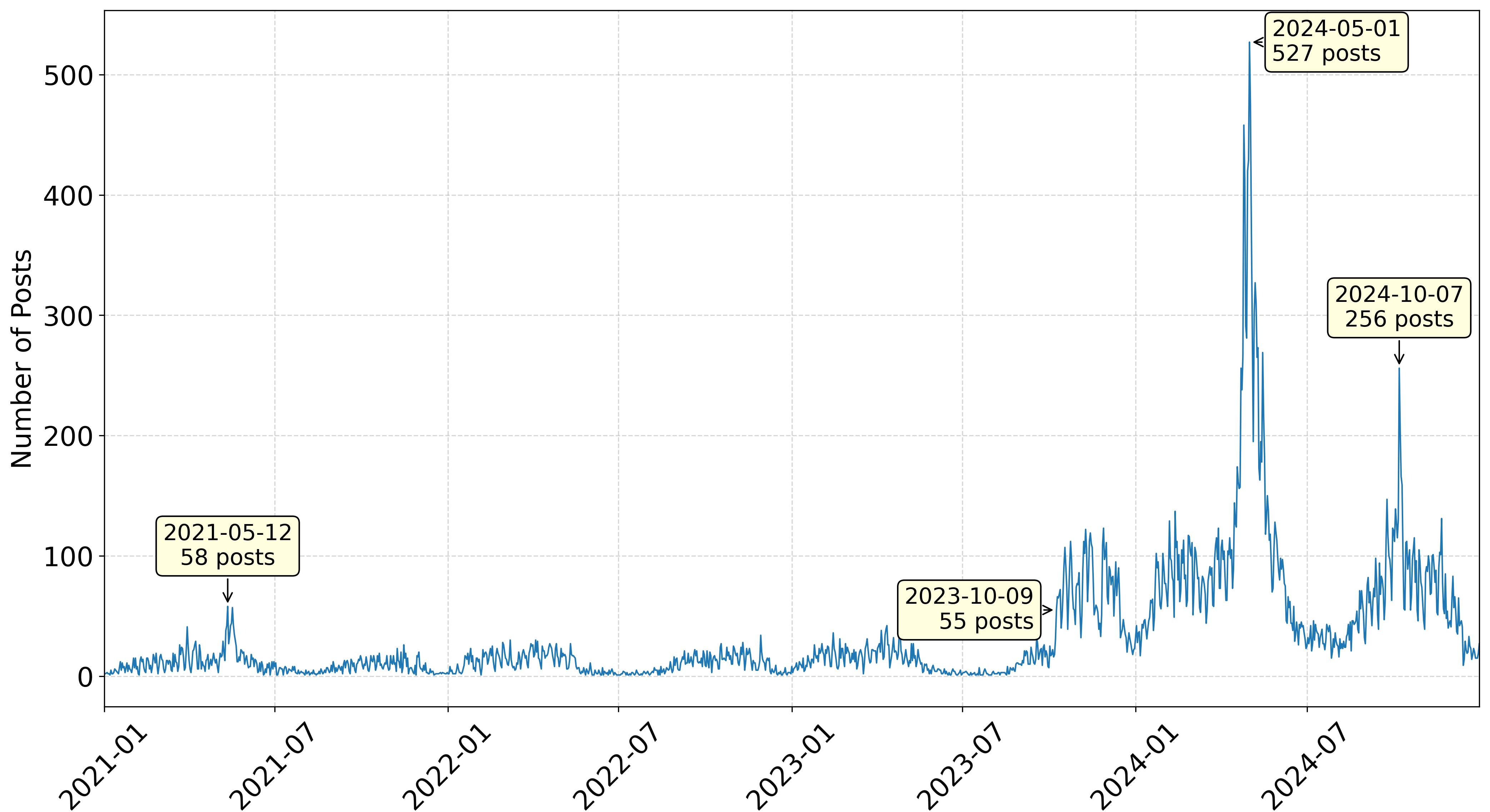
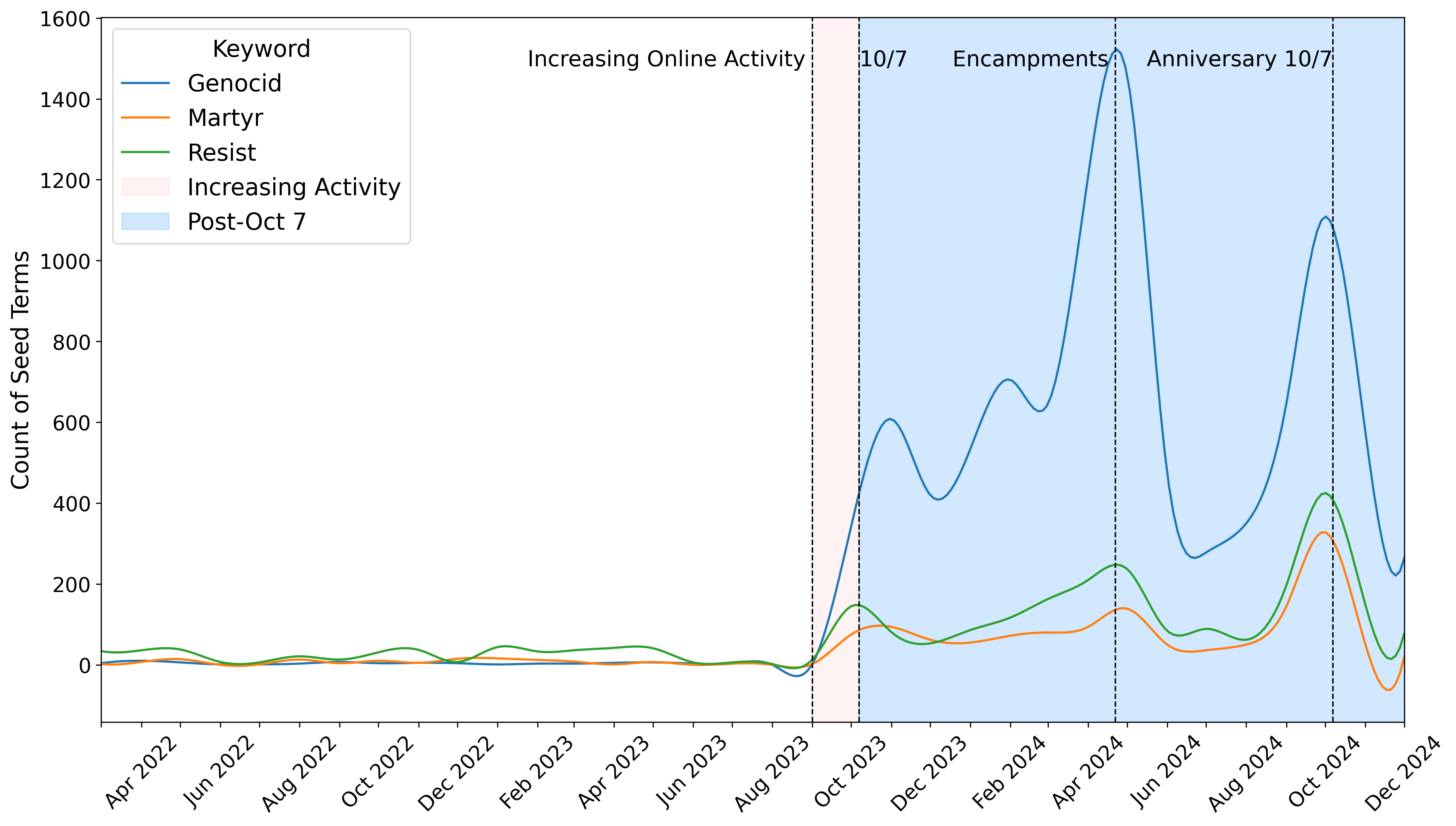
Instagram has become the primary platform for online outreach, mobilization, and collaboration among anti-Israel campus groups. In our dataset, less than 20% of these groups lack an Instagram presence. Online activity surged in the immediate aftermath of the October 7, 2023 Hamas attack on Israel, and peaked during the wave of campus encampments in spring 2024 (see Figure 5.1). Many new accounts and groups were created following the attack, marking the start of an unprecedented mobilization—both online and offline—that exceeded even the high levels seen during the May 2021 Gaza war. The highest volume of daily posts occurred on May 1, 2024, at the height of the spring encampments. Another notable peak followed on October 7, 2024, the one-year anniversary of the Hamas attack, as anti-Israel groups mobilized around that date, many of them under the slogan "One Year of Genocide."
Figure 5.1: Aggregated Number of Posts by Anti-Israel Campus Groups from January 2021 to December 2024.
Radicalized rhetoric invoking terms such as “resistance” and “martyrdom,” along with accusations of genocide against Israel, was already present before October 7, 2023, but became significantly more widespread in its aftermath (see Figure 5.2). The labeling of terrorist attacks against Israel as acts of “resistance”—as exemplified by Hamas’s own framing of the October 7 pogrom (Hamas Media Office, 2024)—and the depiction of slain terrorists as “martyrs,” a form of heroization, rose sharply in the days following the attack. This language is often indistinguishable from the propaganda Hamas produces for Western audiences.
Figure 5.2: Accusations of Genocide & Rhetoric of Resistance and Martyrdom in Instagram Posts by Anti-Israel Campus Groups.
Strikingly, accusations of genocide against Israel also began circulating more widely on October 7 itself—while the country was still counting the victims of Hamas’s genocidal assault. The timing suggests that such claims are often ide- ologically driven and disconnected from actual developments on the ground in Gaza. Additional surges in this rhetoric occurred during the campus encampment wave in late April 2024 and again on the anniversary of October 7. On that day, numerous anti-Israel groups launched a coordinated campaign under the slogan “One Year of Genocide,” falsely alleging that Israel had conducted a genocidal war against Gazans since October 7, 2023—when, in fact, it was Hamas that initiated the conflict on that day with genocidal intent.
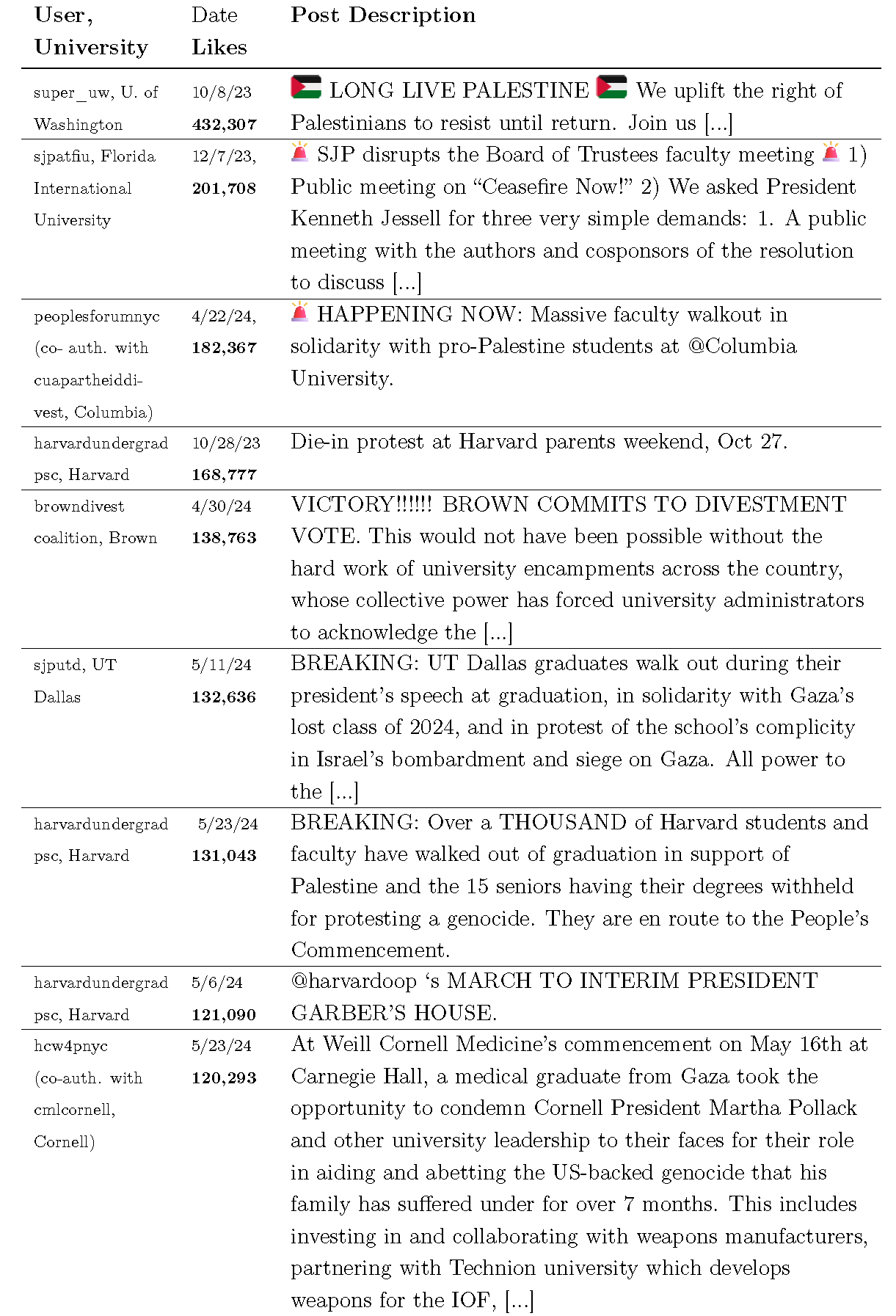
The list of the top ten most liked Instagram posts provides a revealing snap- shot of the kind of messaging that resonates most strongly with followers of anti- Israel campus groups. Each of these posts received well over 100,000 likes—one over 400,000—and reached an even larger audience through views (see Table 5.1).
Table 5.1: Top 10 Instagram Posts by Anti-Israel Campus Groups
All of the most popluar posts were published either in the days and weeks after the October 7 Hamas attacks or during the spring 2024 wave of campus encampments. The large majority of the posts were authored by chapters of Students for Justice in Palestine, the Palestinian Solidarity Committee, various Divest campaigns, or similar student organizations. However, two of the most popular posts originated from off-campus organizations, the People’s Forum, an organization aligned with radical left-wing politics, based in New York City, and Healthcare Workers for Palestine NYC, a local chapter of a national organization. The latter has gone beyond the standard rhetoric of apartheid and settler colonialism common among anti-Israel campus groups, and has also accused Israel of organ trafficking (Healthcare Workers for Palestine, 2025). In both cases, the posts were co-authored by campus-based groups, one at Columbia and the other at Cornell. Instagram’s co-authorship feature, which allows a single post to ap- pear on multiple affiliated accounts simultaneously, is frequently used to amplify reach and visibility across networks.
A closer analysis of the most popular posts reveals a troubling pattern of ideological extremism, oppositional activism, emotional manipulation, and deliberate distortion. These posts operate less as expressions of grassroot student activism and more as propaganda campaigns designed to delegitimize Israel, vilify academic institutions, and galvanize outrage without accountability or nuance.
The rhetoric employed is morally absolutist. Israel is accused—without substantiation—of “genocide,” “ethnic cleansing,” and systemic “occupation.” There is no space in these narratives for competing historical perspectives, legal complexity, or moral ambiguity. Instead, the issue is presented in stark binary terms: one side is wholly oppressive, the other entirely righteous. This framing transforms political engagement into a loyalty test and systematically marginalizes dissenting voices, particularly those of Jewish students or faculty who do not align with the protestors’ worldview.
Some of the content is especially alarming. For example, one of the top-liked posts shows support for a march to the private residence of Harvard’s interim pres- ident—a move that suggests not just protest, but personal intimidation. This post alone received over 100,000 likes, indicating broad approval for targeting individ- uals in their homes. In another widely shared message, “Palestinian resistance” is affirmed as a moral right—this just one day after the Hamas-led massacre of civilians on October 7, 2023. Such timing strongly suggests an intentional ef- fort to reframe mass violence against civilians as justifiable “resistance,” and it contributes to a climate of normalized extremism on campus.
Equally revealing is the consistent use of the term “IOF” to refer to the Israel Defense Forces—a pejorative acronym standing for “Israeli Occupation Forces” or “Israeli Offensive Forces.” This linguistic choice is not incidental; it is part of a broader strategy to undermine Israel’s legitimacy as a sovereign state and to cast its military solely as an agent of oppression.
The posts are performative in nature, staging acts of protest not primarily to engage in meaningful dialogue or policy change, but to manufacture viral spectacle and to make triumphant moral statements. Walkouts during graduation, die- ins during campus events, and confrontational disruptions of university meetings are celebrated as victories, even when they alienate fellow students, disrespect in- stitutional traditions, or degrade the learning environment. More troubling is the repeated portrayal of universities—traditionally places of free inquiry—as institutions that must be either conquered or condemned. Administrators who do not immediately submit to protester demands are framed as enablers of atrocity, with no allowance for legitimate disagreement or institutional responsibility to maintain neutrality, civility, or educational focus. The idea that a university could support pluralism or protect academic freedom while resisting political pressure is absent from this worldview.
The tone of the posts is not just militant but messianic. Protesters are de- picted as a morally pure vanguard, standing on the “right side of history,” while anyone who questions their narrative is implicitly aligned with oppression. This kind of ideological rigidity is deeply anti-intellectual—it replaces inquiry with indoctrination and treats moral outrage as a substitute for critical engagement.
There is also a calculated use of emotion to amplify division. Posts are stylized with dramatic visuals, Palestinian flag emojis, and capitalized slogans such as “VICTORY ” or “BREAKING.” Personal trauma—such as that of a Gaza-born medical student at Cornell who publicly denounces university leadership—is deployed not to open dialogue or inspire empathy, but to indict entire institutions and demand ideological compliance.
That these messages are so widely liked—sometimes by hundreds of thousands—suggests that a significant segment of online campus culture now prioritizes ideological performance over intellectual integrity and is increasingly willing to embrace rhetoric that normalizes, excuses, and, in many cases, glorifies political violence—including acts of terrorism.
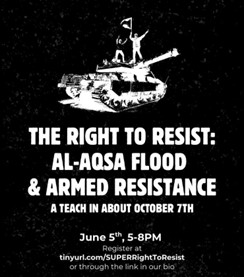
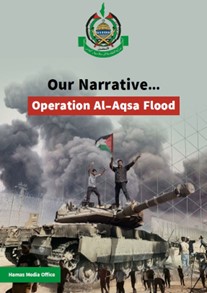
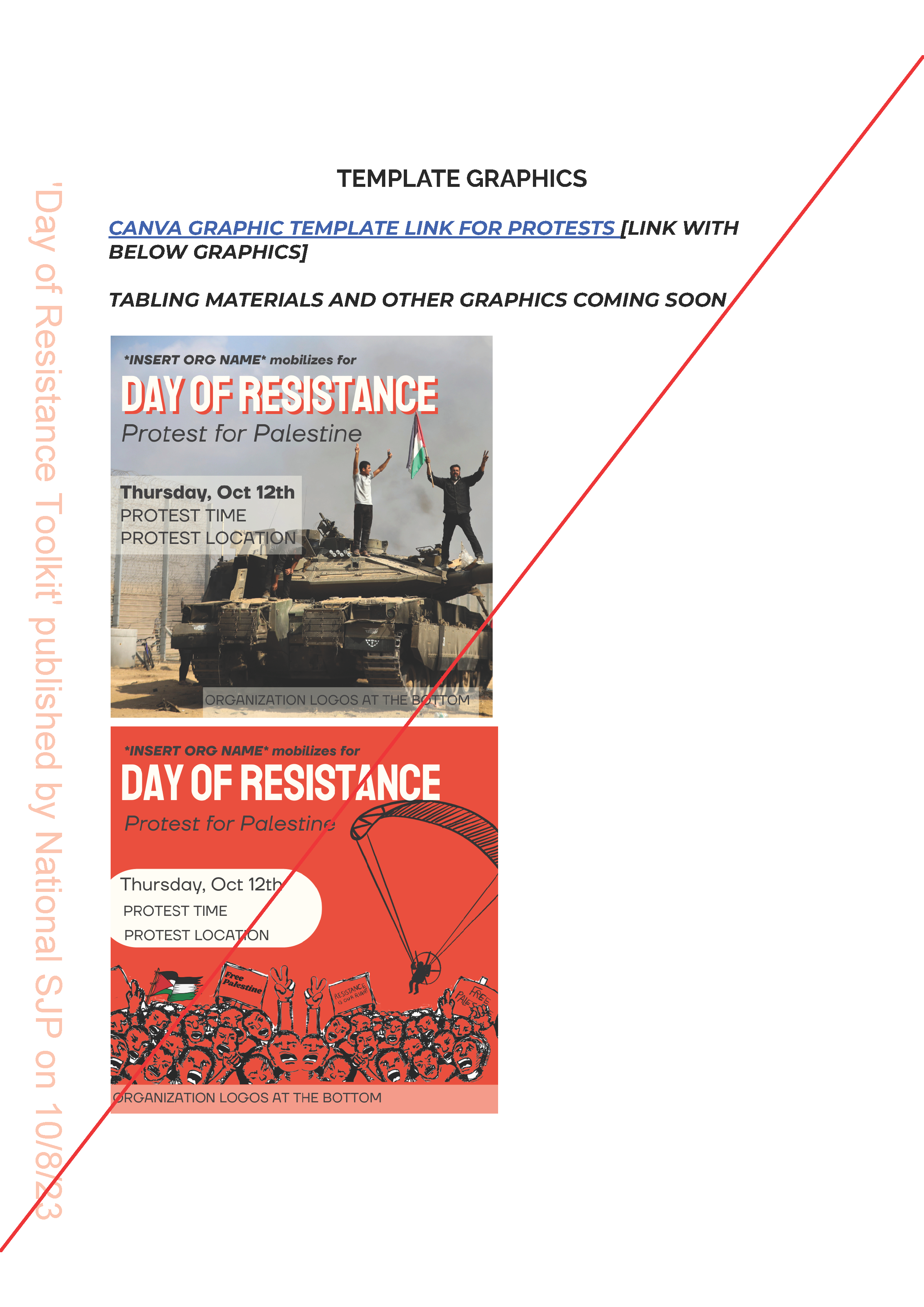
The most-liked post by far—receiving 432,307 likes—was published on October 8, 2023, by Students United for Palestinian Equality & Return at the University of Washington (SUPER at UW). While Hamas terrorists were still actively murdering civilians inside Israel, this group issued a statement under the slogan “Long live Palestine,” explicitly endorsing “the right of Palestinians to resist.” A day earlier, on October 7, 2023—the very day of the Hamas attacks—SUPER at UW posted a similar message on Facebook, promoting an event co-organized with the Seattle chapter of Samidoun Palestinian Prisoner Solidarity Network (Sami- doun). The post included slogans such as “All out for Gaza!” and “Resistance until Return!” In doing so, SUPER echoed and amplified the very rhetoric used by Hamas to justify an unprecedented slaughter of civilians on Israeli soil —effectively celebrating mass violence as legitimate resistance. Samidoun describes itself as a solidarity network supporting Palestinian prisoners held in Israeli jails. However, in October 2024, both the U.S. and Canadian governments designated the organization as “a sham charity that serves as an international fundraiser for the Popular Front for the Liberation of Palestine (PFLP) terrorist organization” (U.S. Department of the Treasury, 2024). Despite growing public awareness of Hamas’s atrocities, SUPER at UW has not moderated its rhetoric or distanced itself from radical, pro-terrorist networks. On October 18, 2023—after the full scale of the Hamas attacks had become widely known—Samidoun called for a public vigil to “Honor the Martyrs of Palestine.” SUPER has since deepened its affiliations with extremist groups, including through multiple co-authored Insta- gram posts with Tariq El-Tahrir, an organization that publicly praised the murder of Yaron Lischinsky and Sarah Milgrim outside the Capital Jewish Museum on May 21, 2025, describing it as “a legitimate act of resistance against the Zionist state and its genocidal campaign in Gaza” (El-Tahrir, 2025). SUPER at UW has also played a central role in organizing disruptive campus actions, most notably the occupation of the Interdisciplinary Engineering Building at the University of Washington in Seattle. On June 6, 2025, the group organized a workshop titled the “Right to Resist Teach-In” (see Figure 5.3a). The promotional graphic for the event—depicting an IDF tank seized by Hamas fighters waving a Palestinian flag—is identical to the cover image of the Hamas propaganda booklet (see Fig- ure 5.3b) Our Narrative... Operation Al-Aqsa Flood (Hamas Media Office, 2024). In their Instagram announcement, the group stated: “This teach-in will cover why we commemorate Al-Aqsa Flood as not only a victory for the resistance, but a sci- entific necessity amidst decades of settler-colonial violence. Additionally, we will address disinformation used to enable the genocide against Palestinians currently unfolding, and why it is vital for us to stand in solidarity with the resistance.” This is not merely downplaying or excusing terrorism–it is an explicit celebration of it.
(a) Promotional post for a “Right to Resist Teach-In” by SUPER_UW, posted on May 29, 2025.(b) Front page of Hamas Media Office pamphlet “Our Narrative... Operation Al-Aqsa Flood.”
Figure 5.3: Illustrative material distributed and embedded in post-October 7 campus discourse.
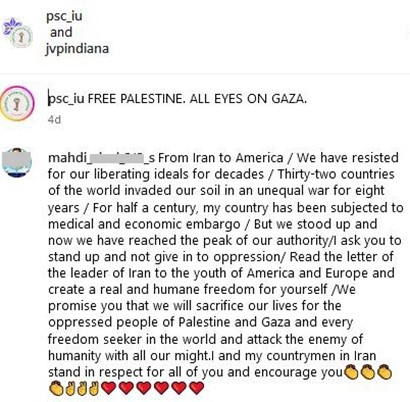
The influence of off-campus groups is significant as we will see in the next chapter on the networks of anti-Israel campus groups. Direct collaboration can be documented through the co-authorship on posts. However, influence can also be asserted by commenting on posts. Some of this influence comes from foreign actors, including from Iran, trying to stir the conversation in certain directions. Iranian Instagram users, recognizable by accounts that are mainly in Farsi and often feature verses of the Qu’ran in the bio, have endorsed anti-Israel student groups in the U.S. and disseminated propaganda of the Iranian regime. On April 28, 2024, a user whose name includes Mahdi - the 12th imam in Shia Islam, awaited for his return - commented on a post by the Palestinian Solidarity Committee at Indiana University, co-authored by Jewish Voice for Peace Indiana, encouraging the anti-Israel protest movement and urging students to read Ayatollah Khamenei’s letter to the youth in Europe and North America (see Figure 5.4).
Figure 5.4: Iranian user urges students to read Khamenei’s propaganda on Indi- ana PSC Instagram account.
None of the comments in the thread expressed any criticism of this endorsement of the Iranian leader, who has repeatedly and brutally suppressed student movements in Iran.
Chapter 6
Mapping the Anti-Zionist Campus Group Networks
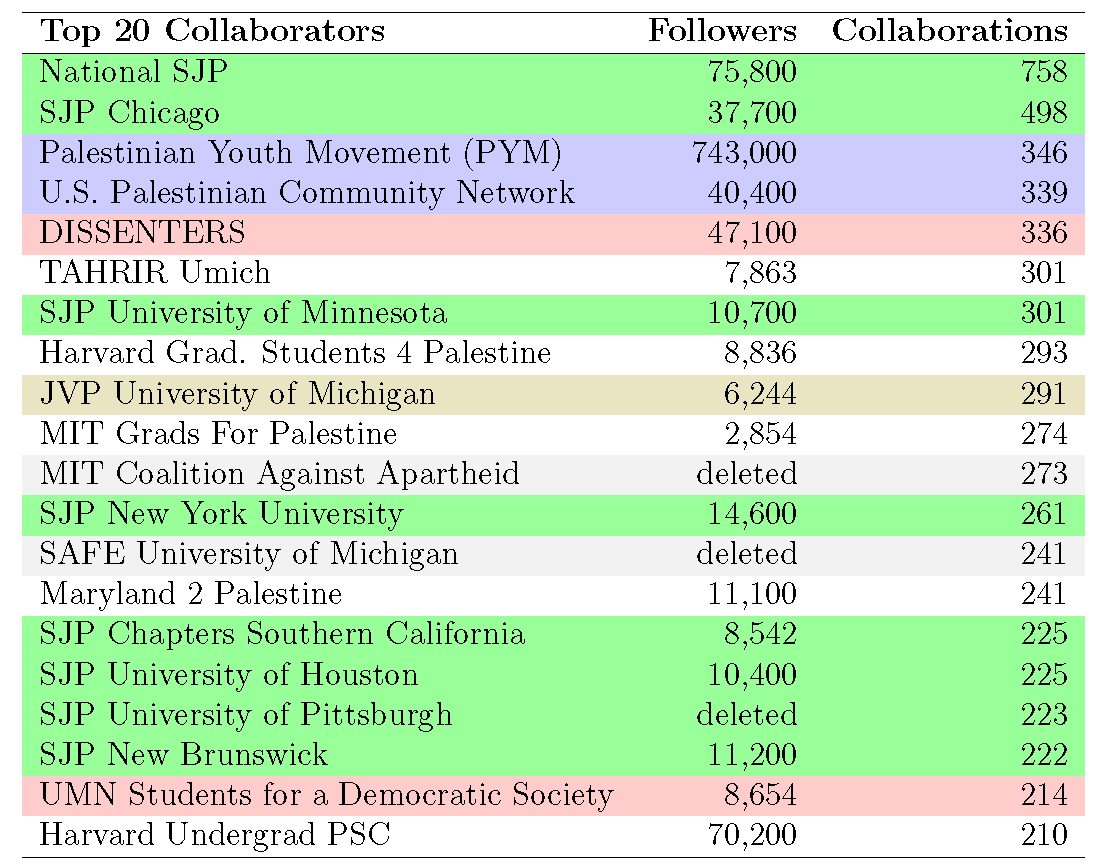
Instagram introduced its co-authoring feature, known as Collaborative Posts, in June 2021. Initially, it allowed for a single collaborative account. Later, in 2023, Instagram expanded the feature to allow up to three collaborators, and then in 2024, it further increased the limit to five collaborators. Co-authored posts dis- play the usernames of all contributing accounts, require mutual invitation and approval, and are simultaneously published to the profile grids of all collabora- tors. Engagement metrics such as likes and comments are aggregated, increasing both visibility and perceived legitimacy of the content. Given these dynamics, co-authorship on Instagram can be interpreted as a robust proxy for deliberate collaboration between actors. A preliminary analysis of this network—derived from co-authorship data—reveals two central findings. First, anti-Israel campus groups exhibit a high level of digital interconnectivity and coordinated messaging. Students for Justice in Palestine (SJP), both nationally and through its many campus chapters, emerges as the most significant actor within this ecosystem, accounting for 40% of the top 20 collaborators. National SJP alone produced 758 collaborative posts, significantly more than any other group in the dataset. This pattern reflects SJP’s role not only as a central hub in the network but also as a key driver of message amplification and cross-campus coordination (see Table 6.1).
Second, the network extends well beyond campus-based organizations. A substantial number of the most frequent collaborators are non-campus, ideologically radical groups, including the Palestinian Youth Movement (PYM) and DIS- SENTERS. PYM, which has reportedly maintained ties to the U.S.-designated terrorist organization Popular Front for the Liberation of Palestine (PFLP), has the largest follower count in the dataset (743,000) and ranks third in total collab- orations. Similarly, groups from the radical political left—such as DISSENTERS and UMN Students for a Democratic Society—feature prominently in the net- work, suggesting ideological alignment and operational synergy between student-led anti-Zionist activism and broader leftist political movements.
Table 6.1: Top 20 Collaborators in the Anti-Israel Campus Group Networks (preliminary data). Green = SJP, Red = non-campus radical political left, Blue = radical Palestinian group, Olive=Jewish group, Gray = deleted Group.
The growth of Instagram’s co-authoring capabilities over time—from one to five collaborators—has likely facilitated broader coalition-building and the si- multaneous targeting of multiple audiences. The appearance of deleted accounts among the top collaborators may indicate violations of platform policies or strate- gic removals in response to reputational risk or moderation pressure. Overall, the findings suggest that this network is not only digitally sophisticated and highly coordinated, but also deeply embedded within a wider ecosystem of radical ac- tivism, both on and off campus. These dynamics merit continued scrutiny as they contribute to the normalization and amplification of extremist rhetoric across ed- ucational and digital spheres.
Chapter 7
The National Students for Justice in Palestine (SJP) and Its Network
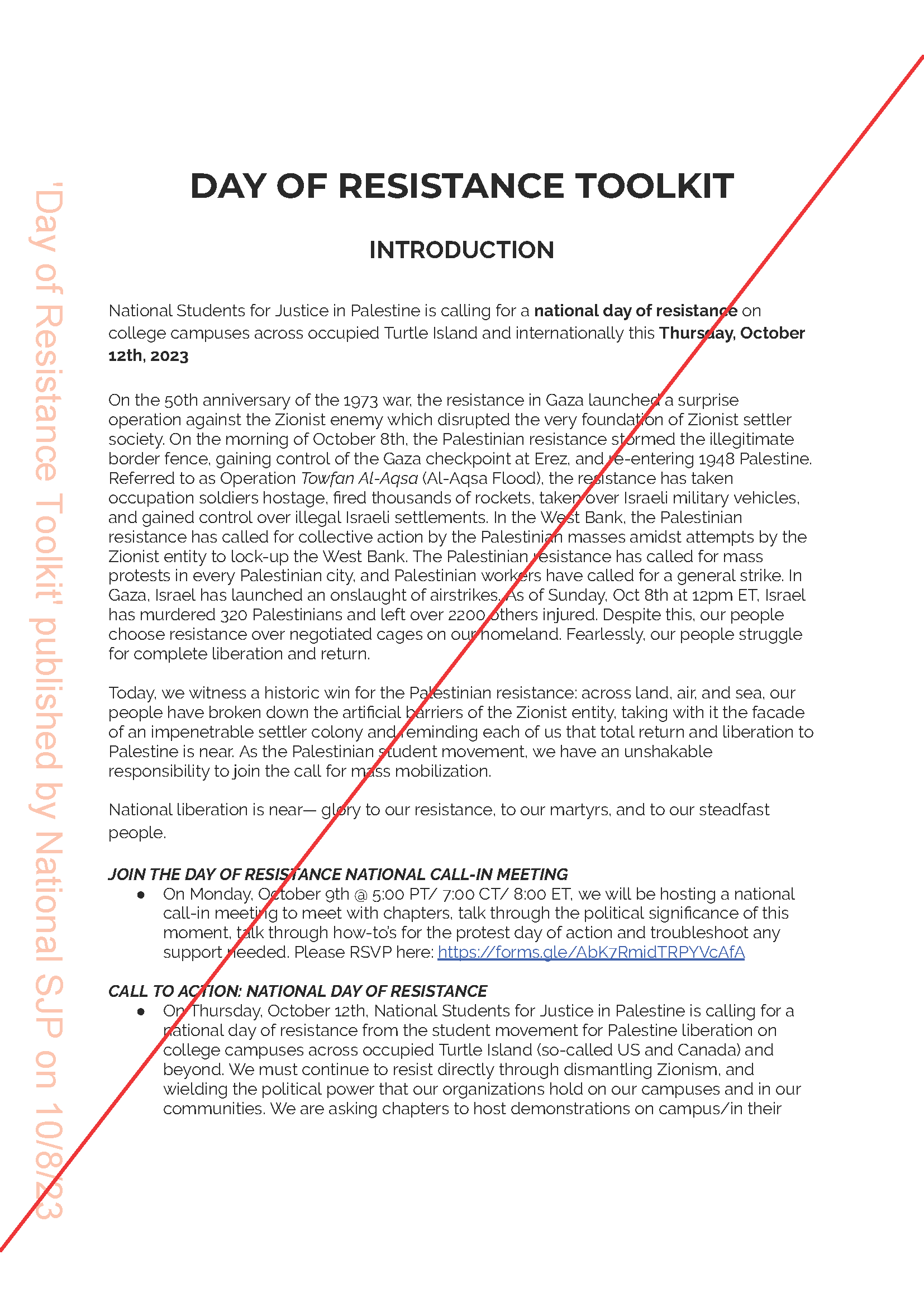
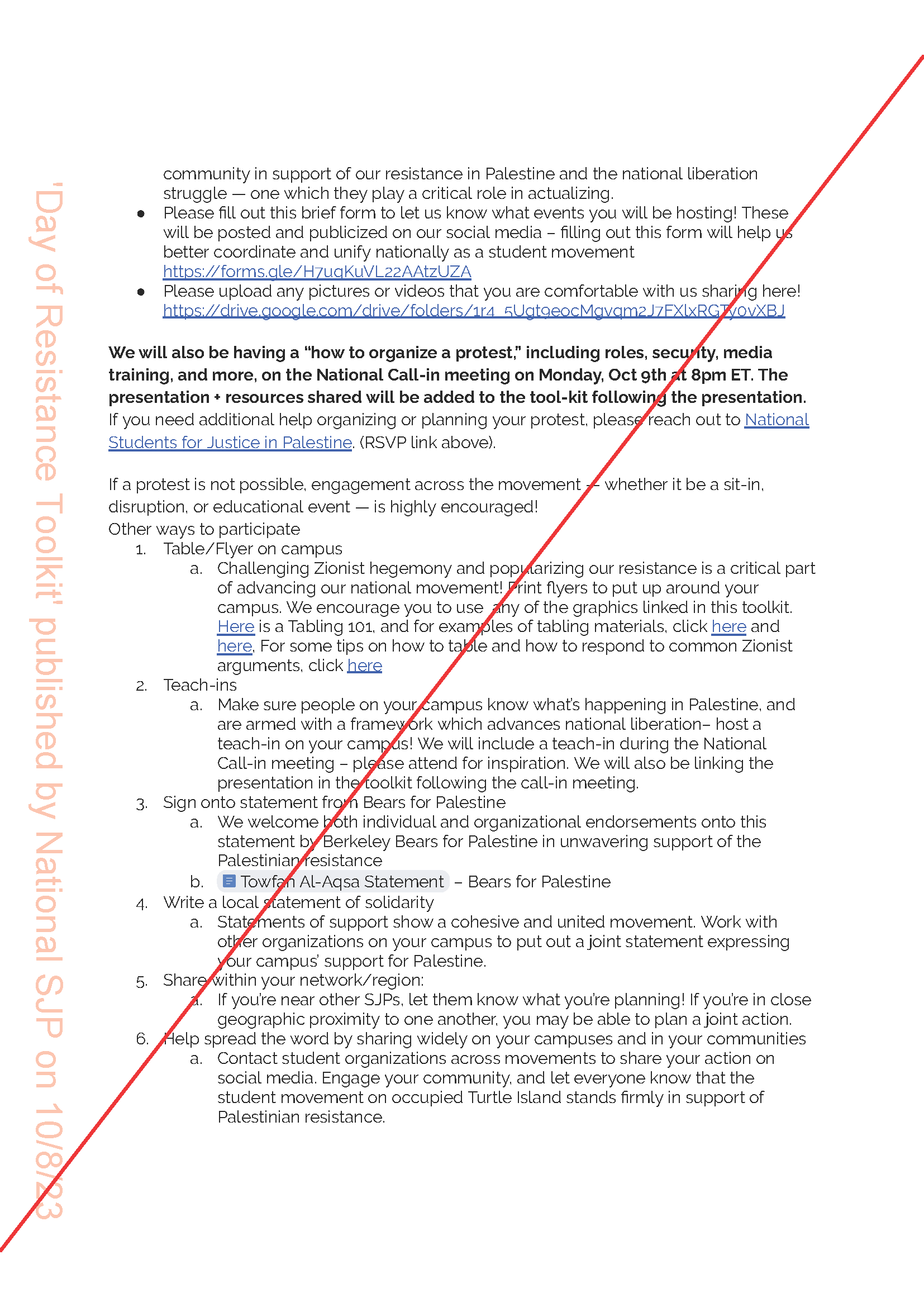
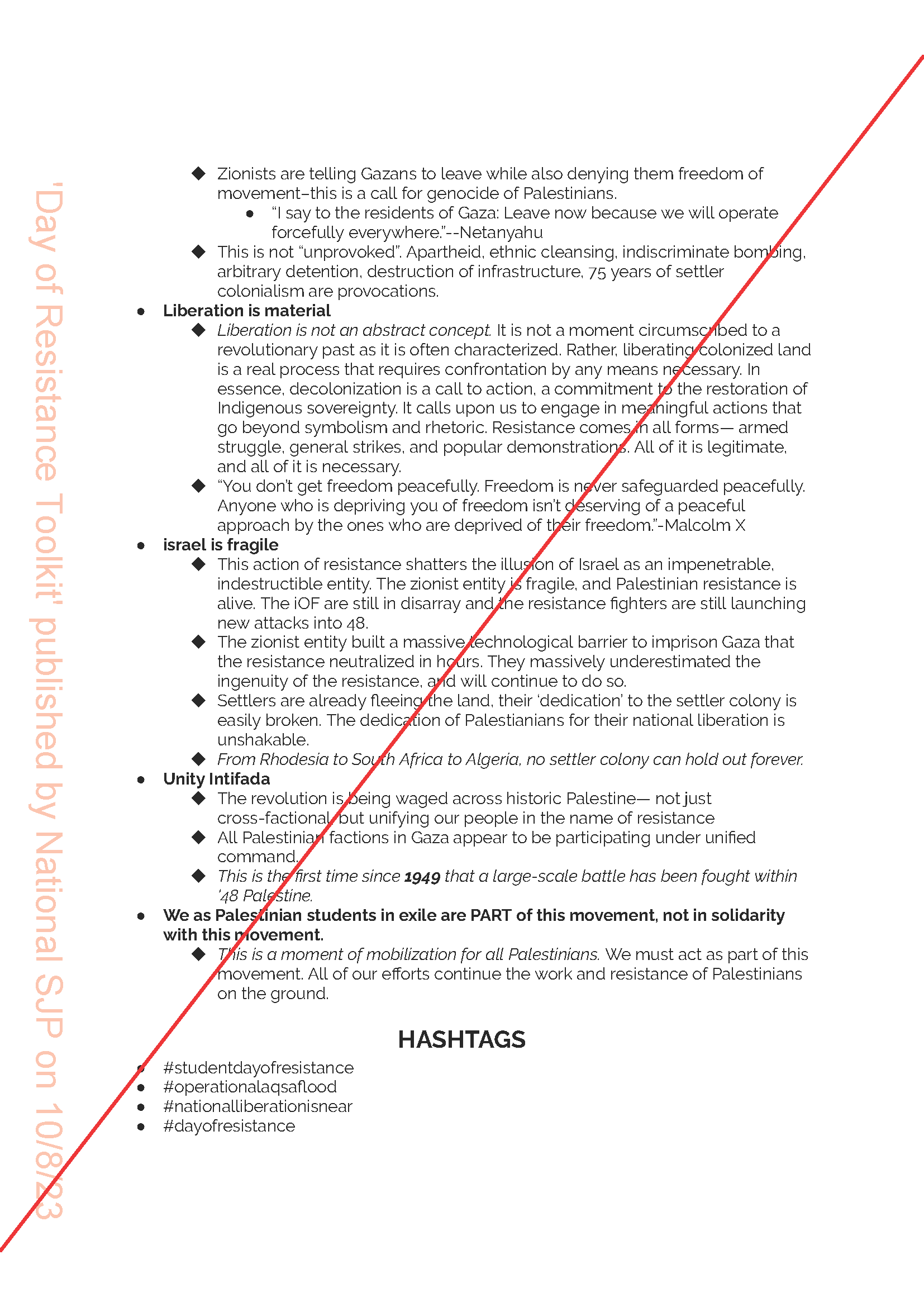
Among all anti-Israel campus groups, National SJP stands out as the most frequent collaborator with other like-minded organizations on U.S. campuses (see Table 6.1). Their posts appear on many of the other anti-Israel groups’ Insta- gram pages. The group has been active for over three decades, organizing campaigns to promote boycotts of Israel and portraying the state in a highly negative light—often through symbolic actions such as constructing mock “apartheid walls” on university campuses. With numerous chapters across the United States, SJP’s national organization plays a central role in coordinating local activities and shap- ing the broader network of anti-Israel activism. Following the Hamas-led attacks on October 7, 2023, SJP was well-positioned to rapidly escalate its activities. Within a day, the organization issued a call for a “Day of Resistance” across the U.S. and Canada (referred to in their materials as “occupied Turtle Island”) and released a detailed organizing toolkit. The organizing toolkit published on Oc- tober 8 (documented in Chapter 9) includes not only strategic guidance, talking points, and templates for mobilization materials, but also a statement explicitly celebrating the Hamas-led attack. It read:
“Today, we witness a historic win for the Palestinian resistance: across land, air, and sea, our people have broken down the artificial barriers of the Zionist entity, taking with it the façade of an impenetrable set- tler colony and reminding each of us that total return and liberation to Palestine is near. As the Palestinian student movement, we have an unshakable responsibility to join the call for mass mobilization. National liberation is near— glory to our resistance, to our martyrs, and to our steadfast people.”1
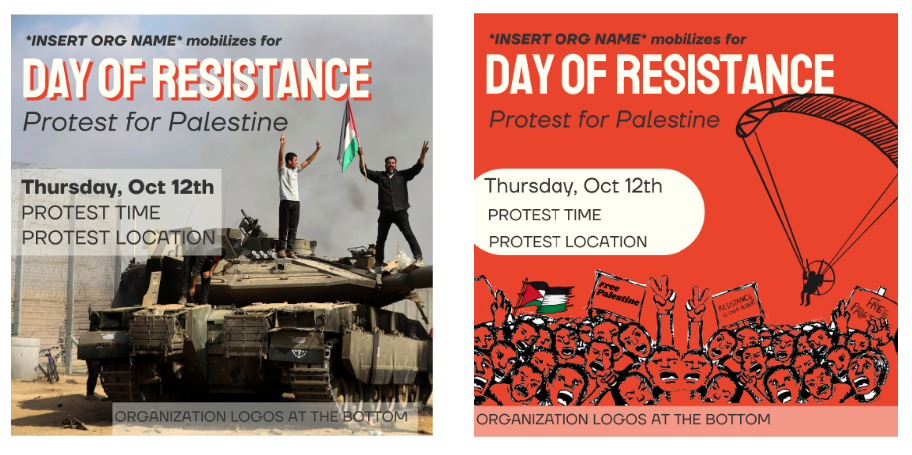
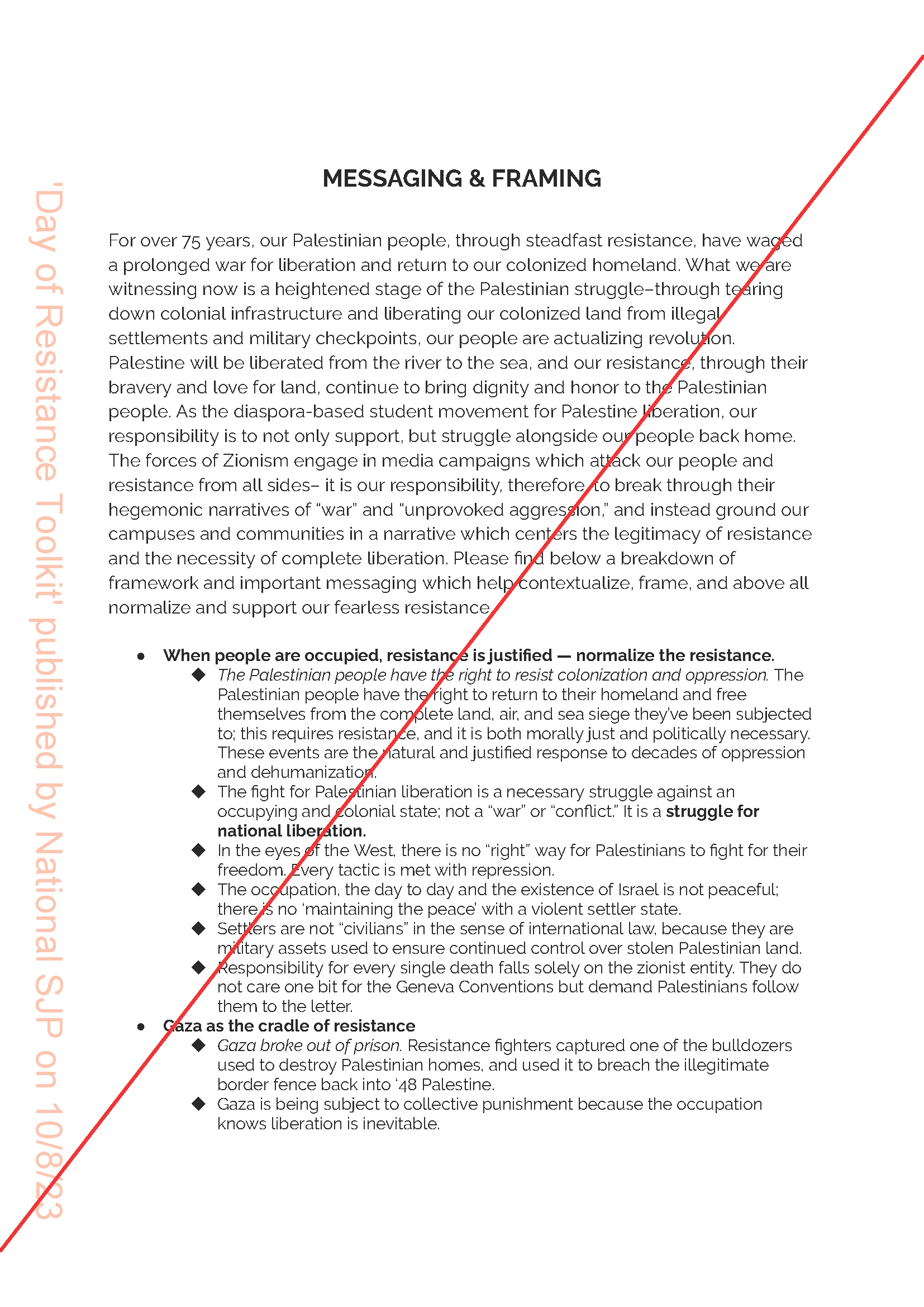
The statement made no mention of, let alone condemnation for, the atrocities committed on October 7. On the contrary, it framed the violence as a justified “confrontation by any means necessary,” and denied Israeli civilians civilian status by labeling them “settlers” and “military assets.” The glorification of “resistance” and “martyrs” effectively endorses—and celebrates—the actions carried out by Hamas on that day. The goal, framed as a “total return and liberation,” implies the elimination of the State of Israel. In keeping with revolutionary rhetoric, Israel is referred to as the “Zionist entity,” while the U.S. and Canada are called “Turtle Island,” symbolically rejecting the legitimacy of all three states. The toolkit widely distributed by SJP includes flyer templates for social media that visually glorify the October 7 attack. These materials feature imagery such as powered paragliders and captured tanks—symbols that evoke victory and heroism. From early on, SJP’s language and imagery have drawn a direct connection between campus activism and the actions of Hamas, both of which are framed under the banner of “resistance” (see Figure 7.1).
Figure 7.1: Templates from the SJP toolkit calling for a “Day of Resistance” on 10/12/2023
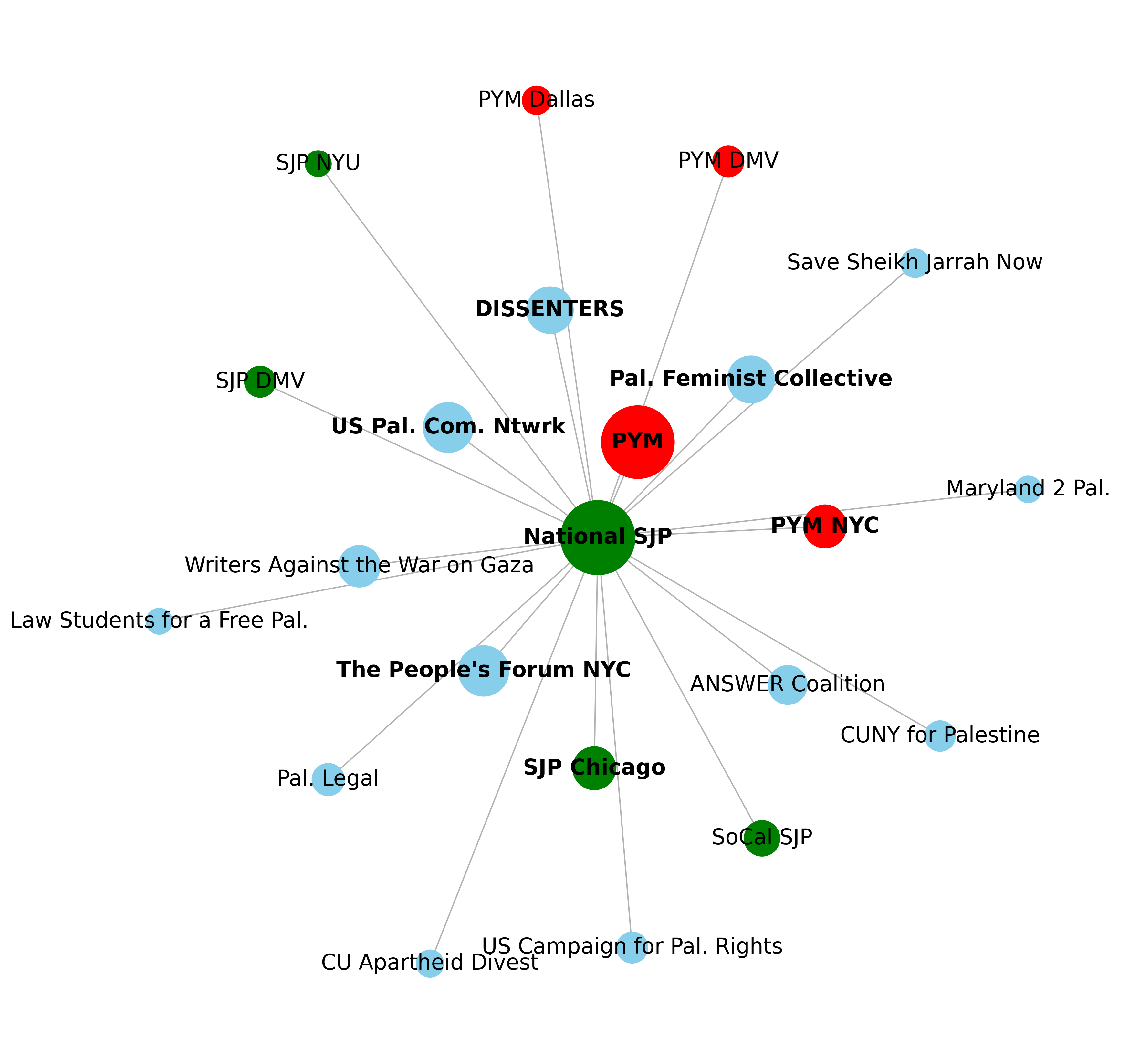
A closer examination of National SJP’s collaboration network reveals that its partnerships extend well beyond the university setting. As visualized in Figure 7.2 (the size and distance of the nods are proportional to the number of collaborations with National SJP), National SJP routinely engages with both campus-affiliated and external organizations. While some of its regular partners are local SJP chapters, many are not connected to academic institutions. In fact, only two of the ten most frequent collaborators are university-based groups.
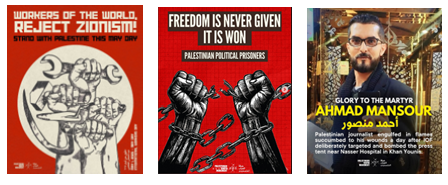
By a significant margin, SJP’s most frequent collaborator is the Palestinian Youth Movement (PYM)—an international organization with local chapters that also appear regularly in SJP’s network. PYM has been noted for promoting individuals affiliated with the Popular Front for the Liberation of Palestine (PFLP), a group designated as a terrorist organization by the U.S. government since 1997 (NGO Monitor, 2025). SJP’s partnership with PYM significantly amplifies its visibility; PYM’s social media following—approximately 737,000—is nearly ten times larger than that of SJP. This close collaboration not only broadens SJP’s audience but also suggests that PYM’s radical anti-Zionist rhetoric and visual language may shape elements of SJP’s discourse. PYM’s posts frequently incorporate imagery associated with socialist iconography, national liberation move-ments, and Islamist martyrdom (see Figure 7.2). Such content often features slogans that reject the legitimacy of the Israeli state, depict convicted Palestinian terrorists imprisoned in Israel as political prisoners, and glorify members of terrorist groups—such as Ahmad Mansour, killed by the IDF on April 7, 2025, who was affiliated with Palestinian Islamic Jihad, another U.S. designated terror organization.2
Figure 7.2: Top 20 Collaborators in the National SJP Network. Green=SJP, Red=PYM.Figure 7.3: PYM imagery with references to socialism, liberation movement, and Islamist martyrdom, posted on 5/1/2025, 4/18/2025, and 4/7/2025
In addition to PYM, other frequent collaborators include groups from the radical left and anti-war movements, such as Dissenters, Act Now to Stop War and End Racism (ANSWER), and The People’s Forum NYC. In recent years, these organizations have increasingly focused their activism on the Israel-Palestinian conflict and war in Gaza. Their collaboration with SJP helps amplify SJP’s messaging within broader protest networks. While National SJP has 76,000 followers, this is a fraction of the 743,000 followers of the Palestinian Youth Movement. Dissenters has 47,100 followers, ANSWER 41,000, and The People’s Forum 121,000.3
1. "Day of Resistance Toolkit,” page 1. The toolkit can be found in the annex to this report.
2. Pro-Palestinian sources describe Ahmad Mansour as a journalist employed by the Islamic Jihad news agency Palestine Today, while Israeli sources identify him as a rocket operative for the group. (Committee to Protect Journalists, 2025; Levaton, 2025)
3. Follower counts are rounded to the nearest thousand and reflect totals as of May 31, 2025.
Chapter 8
Conclusion
The Hamas attacks on October 7, 2023, marked a turning point in both campus rhetoric and activist mobilization. The downplaying, denial, or outright glorification of the attacks by major student groups revealed the extent to which certain campus narratives have embraced language and imagery long associated with violent extremism. The immediate surge in online activity, combined with a rapid escalation in anti-Israel rhetoric and a spike in antisemitic incidents, illustrates how campus and digital environments are increasingly interlinked in ways that can reinforce radicalization. This report draws on a comprehensive dataset tracking antisemitic incidents, anti-Israel campus group activity, and social media trends from 2015 to 2024. By combining incident data with network and content analysis of Instagram posts—the primary online platform for anti-Israel mobilization—we identify key correlations, key actors, rhetorical patterns, and digital amplification strategies. Our findings reveal not only potential factors that contribute to heightened antisemitic activity, but also how radicalized language has been mainstreamed through aestheticized, emotionally charged online content that frequently mirrors or directly reproduces propaganda produced by Hamas and other designated terrorist organizations. These insights are particularly urgent today, as recent off-campus terror attacks have been publicly justified by the perpetrators using the slogan “Free Palestine.” The violent rhetoric disseminated by anti-Israel campus groups may contribute to an environment that not only legitimizes antisemitic speech and harassment, but also encourages acts of physical violence.
Trigger Events and Amplifiers: Understanding Surges in Campus Antisemitism
Antisemitic incidents on U.S. campuses consistently increase during academic semesters, with pronounced surges often following major geopolitical events involving Israel. Notable spikes occurred in May 2021 during the 12-day war between Israel and Hamas, and even more sharply in October and November 2023. However, the most significant peak appears to be driven more by campus activism than directly by developments in Israel or Gaza: the highest monthly total was recorded in April 2024, coinciding with the wave of university encampments. A closer look at October 2023 is particularly revealing. The number of antisemitic incidents began rising immediately on October 7, even as the Hamas attacks against Israeli civilians were still unfolding and graphic images circulated on social media. That day alone saw 17 recorded incidents—more than triple the early October daily average. From October 9 to 12, daily incidents surged to around 30, coinciding with intensified activism by radical anti-Israel groups and the call by the National Students for Justice in Palestine (SJP) for a “Na- tional Day of Resistance.” The SJP’s messaging closely echoed Hamas narratives, glorifying the attacks and likely contributing to the increasingly hostile campus climate. Strikingly, the average number of antisemitic incidents between October 7 and 26—during Israel’s initial phase of targeted airstrikes—was higher than during the period following the launch of the ground invasion on October 27, despite the latter causing more extensive suffering among Palestinian civilians. This suggests that the immediate aftermath of the Hamas massacre, combined with activist mobilization and inflammatory rhetoric, was a more potent driver of campus antisemitism than the ongoing military campaign itself. These dynamics point not only to a correlation between Middle East flashpoints and antisemitic activity, but also to a broader psychological and social mechanism: high-profile acts of antisemitic violence—or their glorification—can embolden individuals who harbor antisemitic beliefs. Violence against Jews often serves as a trigger, activating latent prejudice and prompting action. This pattern has been observed elsewhere: after the 2012 shooting at a Jewish school in Toulouse, France, in which three young children and a teacher were brutally murdered, a wave of antisemitic incidents followed—even in neighboring countries like Britain. The pattern seen on U.S. campuses in October 2023 may reflect a similar dynamic, raising urgent questions about the campus and societal conditions that allow such escalation to take root and spread. A closer statistical analysis further underscores these concerns. The presence of anti-Israel groups on campus is strongly and consistently associated with higher levels of antisemitic incidents. Quantile regression analysis reveals that this relationship is especially pronounced on campuses already experiencing elevated incident rates. In other words, where antisemitism is already a problem, each additional anti-Israel group appears to contribute disproportionately to its intensification. This may be explained by the intensification—or normalization—of an anti-Israel climate that lowers the threshold for antisemitic acts, making hostility toward Jews.
Radicalized Language Has Moved from the Fringe to the Mainstream
Radicalized language that demonizes Israel—as well as students, faculty, administrators, and especially Jewish students who do not explicitly endorse the movement’s demands—has moved from the fringes of activist discourse into the mainstream. Terms like “resistance” and “martyrdom” are now widely used to glorify violence and even terrorism, while sweeping accusations against Israel—of genocide, settler colonialism, and apartheid—are routinely disseminated without evidence and largely without objection. Although rhetoric and imagery that mirror or directly amplify the language of designated terrorist organizations, particularly Hamas, were already present in fringe spaces prior to October 7, 2023, anti-Israel campus groups have since succeeded in introducing these narratives to a much broader audience. This is evident in the extraordinary reach and engagement of their social media content, with some posts garnering hundreds of thousands of likes. In many cases, the glorification of terrorism as “resistance,” the celebration of violence as “martyrdom,” and the demonization of Israel through morally absolutist messaging have been normalized not only within anti-Israel campus spaces but far beyond them. Some of the most widely shared language and imagery are indistinguishable from Hamas propaganda—indeed, in several instances, the visuals used by campus groups have been directly lifted from official Hamas materials. Anti-Israel campus organizations, often in close coordination with off-campus allies, deploy emotionally charged narratives designed to galvanize outrage and suppress dissent. These posts circulate under the banner of human rights and decolonization, yet frequently promote rhetoric that is ideologically rigid, factually unsupported, and deeply polarizing. The performative nature of these campaigns—crafted for viral appeal and moral clarity rather than debate or nuance—helps explain their wide resonance. What presents itself as grassroots student activism is increasingly embedded in a broader, networked ecosystem that leverages digital platforms to radicalize, recruit, and normalize extremist worldviews. Through aesthetic packaging, co-authorship networks, and viral amplification, extremist narratives once confined to militant or fringe spaces have become a visible and influential part of contemporary campus discourse.
Key Actors in the Anti-Israel Campus Group Networks
The anti-Israel network on U.S. campuses is structured around a set of highly coordinated and ideologically aligned student and faculty groups. At the cen- ter of this network is National Students for Justice in Palestine (National SJP), which serves as the primary organizer and narrative driver of anti-Israel cam- pus activism —even though it does not operate within a traditional top-down hierarchical structure. With the highest number of collaborations with other groups, National SJP plays a central role in shaping protest strategy, coordi- nating campaigns, and distributing radical messaging—including materials that openly glorify Hamas-led violence as legitimate resistance. Its influence was es- pecially visible following the October 7, 2023, Hamas attacks, when it immedi- ately called for a nationwide “Day of Resistance” and circulated an organizing toolkit that celebrated the attack as a historic victory for Palestinian liberation. Local SJP chapters—such as those at New York University, the University of Minnesota, and the University of Chicago—serve as operational hubs with may collaborations across universities. These groups are not merely local activists but active participants in a broader, digitally networked movement. They replicate National SJP’s messaging, organize on-the-ground actions like walkouts and en- campments, and frequently co-author Instagram posts with both other campus chapters and external groups. While they often present themselves as grassroots voices, their activities reflect high levels of coordination and alignment with ide- ologically extreme narratives. Beyond SJP, other student-led organizations such as Palestinian Solidarity Committees and Divestment campaigns play a significant role in reinforcing the anti-Israel narrative within academic settings. These groups often frame their activism in terms of social justice or human rights, but their rhetoric is frequently indistinguishable from that of more overtly radical organizations. Accusations of genocide, apartheid, and settler-colonialism are central themes, and calls for divestment are embedded within broader ideological projects that seek to delegitimize the State of Israel altogether. Graduate student organizations, including Harvard Graduate Students for Palestine and MIT Grads for Palestine, contribute to the incorporation of this activism into the uni- versity structure. Though they often operate under the guise of social justice or are linked to legitimate efforts of unionization, these groups also reproduce ex- tremist rhetoric, lending it a veneer of intellectual authority. Their involvement strengthens the movement’s credibility among faculty and administration and expands its influence within professional and scholarly circles. Faculty-led groups, albeit less active on Instagram, play a critical and often overlooked role in legit- imizing and sustaining this activism. Comprising roughly 17% of all identified anti-Israel groups, these faculty organizations often serve as ideological anchors, reinforcing the framing of anti-Zionism as a necessary expression of anti-colonial or social justice commitments. Faculty members involved in such groups con- tribute to shaping classroom discourse, organize teach-ins, and support student activism, often without challenge from institutional oversight. In doing so, they help normalize rhetoric that is not only hostile to Israel but increasingly an- tagonistic toward Jewish identity itself. A further component of the campus network is the involvement of anti-Zionist Jewish or partly Jewish groups, such as Jewish Voice for Peace (JVP). While presenting themselves as internal critics of Zionism, such groups are often more active in non-Jewish activist spaces and have, at times, promoted antisemitic narratives (Elman, 2020). More notably, their participation often serves to provide rhetorical and symbolic cover for other organizations, helping to deflect accusations of antisemitism and to discredit con- cerns raised by Jewish students and advocacy groups. Groups like JVP at the University of Michigan frequently co-author content with SJP and similar orga- nizations, reinforcing shared messaging while framing it as grounded in Jewish moral authority. By endorsing messaging that denies Jewish self-determination and legitimizes violence against Israeli civilians, these groups enable the normal- ization of radical anti-Israel positions within activist spaces while claiming moral legitimacy through Jewish identity. In sum, the campus-based anti-Israel network is far from an unstructured or spontaneous student movement. Rather, it is a tightly coordinated system, characterized by cross-campus collaboration, ideolog- ical alignment, and significant participation from faculty and off-campus groups. Through digital platforms like Instagram, these actors project a unified message that often frequently echoes extremist ideology, transforming the university into a staging ground for activism and radical political mobilization.
Off-Campus and Foreign Influence in the Radicalization of Anti-Israel Campus Groups
The role of off-campus and foreign actors, including groups with reported links to terrorist organizations and Iranian-linked accounts, in amplifying anti-Israel campus content raises concerns about external interference in university discourse. These actors use emotionally charged rhetoric and (pseudo-) Marxist or Islamic revolutionary references to insert themselves into U.S. student movements and steer them in increasingly extreme directions. Organizations unaffiliated with universities—including groups with documented ties to U.S.-designated terrorist organizations like the Popular Front for the Liberation of Palestine (PFLP)—are not only frequent collaborators with campus-based groups but also major ampli- fiers of extremist rhetoric. Among the most active non-campus partners is the Palestinian Youth Movement (PYM), which collaborates extensively with campus organizations such as National Students for Justice in Palestine (SJP). PYM’s visual language and rhetoric mirror those of Hamas and other militant groups, invoking themes of martyrdom, armed resistance, and revolutionary liberation. These narratives are seamlessly integrated into the content circulated by student groups, blurring the line between protest and propaganda. The use of Instagram’s co-authorship feature has facilitated the widespread and rapid dissemi- nation of this rhetoric. Posts created or co-authored by off-campus groups from the (radical) left, like Dissenters, The People’s Forum, and Healthcare Workers for Palestine NYC frequently reach audiences of tens of thousands, shaping the ideological contours of campus discourse far beyond any one university. Of particular concern is the ideological convergence between far-left activist networks, Islamist revolutionary narratives, and certain antisemitic tropes. These groups often employ emotionally charged language rooted in (pseudo-)Marxist and Islamic revolutionary frameworks, recasting Israel as a settler-colonial entity and its citizens as legitimate targets of “resistance.” The glorification of “martyrs,” vilification of “Zionist” entities, and rejection of Israel’s legitimacy are consistent features of this messaging—often echoing talking points used by Hamas, Hezbollah, and the Iranian regime. Indeed, foreign influence has also been doc- umented, including endorsements from Iranian-linked Instagram accounts. Some of these accounts have actively engaged with U.S. campus group content. For example, one such user urged students at Indiana University to read a letter from Iran’s Supreme Leader Ayatollah Khamenei, signaling a deliberate attempt to steer student movements toward ideological positions favored by the Islamic Republic. This networked ecosystem—linking campus activists, radical off-campus groups, and foreign ideological actors—creates a highly porous and politicized environment. It facilitates the mainstreaming of radical anti-Zionist rhetoric and contributes to a climate in which antisemitism, intimidation, and, in some cases, violent incitement can flourish. Slogans like “Free Palestine” and “resistance by any means necessary” are no longer merely symbolic; they are deployed to justify real-world acts of violence, including the murder of Jewish civilians. Understanding the reach and influence of these off-campus and foreign actors is crucial to addressing the radicalization of student activism and safeguarding academic environments from external manipulation and ideological extremism.
Call for Institutional Clarity and Accountability
Universities must come to terms with the reality that radical pro-Palestinian/ anti-Israel campus activism—while often framed as political engagement—can, under certain conditions, become a conduit for incitement, intimidation, and even violence. Academic institutions have a responsibility to uphold free expression, but this freedom must not come at the expense of safety, pluralism, and the fundamental rights of others. Clear, enforceable policies that distinguish protected political speech from intimidation and harassment—particularly when slogans, imagery, or messaging echo or replicate rhetoric produced by designated terrorist organizations—are urgently needed. This includes not only explicit calls to violence, but also symbolic content that glorifies acts of terror—often directed at Jews—under the guise of “resistance”, “Intifada”, or “liberation.” Just as critical is the consistent and impartial enforcement of existing university codes of conduct. Institutions must ensure that all students—regardless of their religious background, political views, or national identity—are protected from harassment, exclusion, and intimidation. The failure to do so undermines the university’s mission as a place of open inquiry and mutual respect. What is most dangerous is not simply the voicing of extremist views, but the cultivation of a campus climate in which such views are normalized and dissent is actively stigmatized. In these environments, students and faculty who object to antisemitic or pro-terrorist rhetoric– or who question sweeping allegations against Israel of genocide, colonialism, or apartheid– often feel unable to speak out without risking social ostracism, academic consequences, or intimidation. This chilling effect lowers the threshold for harassment and emboldens those who seek to suppress opposing views through pressure or threats. Surveys consistently show that the majority of students and members of the American public reject extremist rhetoric, oppose terrorism, and view Israel as a legitimate state like any other. Yet on too many campuses, this majority is drowned out or silenced by a radical and vocal minority. The dominance of this fringe does not reflect broader student opinion, but it shapes campus discourse through intimidation, reputational threats, and ideological policing —creating an environment where dissent is punished and extremism is normalized. Universities cannot continue to ignore the corrosive effects of this dynamic. A renewed commitment to institutional clarity, moral consistency, and the protection of all students—particularly those targeted by antisemitic rhetoric—is not only a matter of compliance with ethical and legal standards. It is also essential to preserving the credibility and integrity of higher education in democratic societies.
Bibliography
Alamsyah, A., Muharam, A. W., & Ramadhani, D. P. (2024). Polarized Narratives in Digital Spaces: A Social Network Examination of the Gaza Conflict. 2024 International Conference on Data Science and Its Appli- cations (ICoDSA), 527–532. https://doi.org/10.1109/ICoDSA62899.2024.10651759
Community Security Trust. (2024). Campus Antisemitism in Britain 2022–2024. Community Security Trust. London, United Kingdom. Retrieved May 29, 2025, from https://archive.jpr.org.uk/download?id=22329
Divine, D. R., Elman, M. F., & Romirowsky, A. (Eds.). (2019). Word Crimes: Reclaiming The Language of The Israeli-Palestinian Conflict. Israel Studies, 24 (2), 1. https://doi.org/10.2979/israelstudies.24.2.01
Elman, M. F. (2020). Antisemitism and BDS on US Campuses: The Role of Jewish Voice for Peace. Journal of Contemporary Antisemitism, 3 (2), 91-102.https://doi.org/10.26613/jca/3.2.60
Farber, B. A., & Poleg, A. (2019). Campus Diversity, Jewishness, and Antisemitism. Journal of Clinical Psychology, 75 (11), 2034–2048. https : / /doi.org/10.1002/jclp.22862
Karagiorgos, G., Konstantinidou, C. C., & Peklari, I. (2023, December). Gaza Through Whose Lens? Breaking Apart U.S. Coverage of the Israel-Hamas War. Retrieved May 4, 2025, from https://features.csis.org/shaping-africas-climate-future
Nelson, C. (2019). Israel denial: Anti-Zionism, anti-semitism, & the faculty campaign against the Jewish state. The Academic Engagement Network; Indiana University Press. https://doi.org/10.2307/j.ctvf3w25x
Sapir, E., & Kluveld, A. (2024, October). Unsafe Spaces: The Rise of Anti-Semitism in the Dutch Academic World. Findings of a study on the expe- riences of Jewish and Israeli students and staff during the protests after October 7.
Stoller, K. R. (2025). Antisemitismus an deutschen Hochschulen. In O. Glöckner & G. Jikeli (Eds.), Antisemitismus in Deutschland nach dem 7. Oktober 2023 (pp. 129–154). Georg Olms. https://doi.org/10.5771/9783487424996
U.S. Department of the Treasury. (2024, October). United States and Canada Target Key International Fundraiser for Foreign Terrorist Organization PFLP. Retrieved May 31, 2025, from https://home.treasury.gov/news/press-releases/jy2646
Wright, G., Volodarsky, S., Hecht, S., & Saxe, L. (2024, April). Drawing the Line: How US Jewish College Students Think About Antisemitism. https://doi.org/10.48617/RPT.1220
Chapter 9
Annex: "Day of Resistance Toolkit"
“Days of Resistance Toolkit” Organizing Guide by National Students for Justice in Palestine
The following material was published by the National Students for Justice in Palestine organization and disseminated by student activist networks in the immediate aftermath of October 7, 2023. It is included here for illustrative pur- poses only. Readers should be advised that the document contains language and framing that endorses or excuses violence.
Institute for the Study of Contemporary Antisemitism social media channels
 The College of Arts